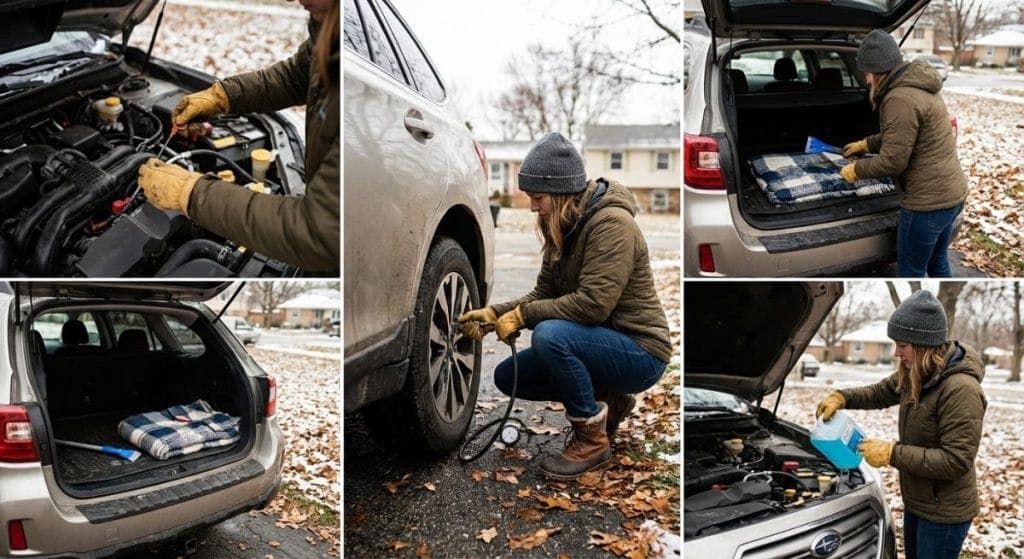
Cold weather is coming, and your car isn’t ready. That’s the situation millions of drivers find themselves in every fall, and it’s one of the easiest problems to fix if you know what to check.
This winterize your car checklist covers everything from tire pressure to coolant levels, wiper blades to brake condition. Whether you’re driving a beater or a newer used car you just bought, the steps are the same. Let’s get into it.
Why Winterizing Your Car Matters
Winter is genuinely hard on vehicles. Cold temperatures cause tire pressure to drop, thicken your engine oil, strain your battery, and make your brakes work harder on slick roads. If your car was already borderline on any of these systems, a cold snap can push it over the edge.
This isn’t just about comfort. Winter driving conditions cause a disproportionate share of weather-related crashes every year. A solid checklist protects your safety and saves you money by catching problems before they become roadside emergencies.
If you recently bought a used car, run a free VIN lookup first. You want to know the vehicle’s history before trusting it in tough conditions.
How to Winterize a Car: Step-by-Step Checklist
This checklist isn’t complicated, but skipping steps is how people end up stranded. Go through each one before the temperatures drop.
1. Check Your Tires
Your tires are the most important thing on this entire checklist. They’re the only part of your car actually touching the road, and everything from braking to steering depends on them.
Start with tire pressure. For every 10 degrees Fahrenheit the temperature drops, tire pressure falls by roughly one PSI. Underinflated tires handle worse, wear unevenly, and reduce fuel economy. Check your tire pressure when the tires are cold, and match the number on the sticker inside your driver’s door jamb, not the number molded into the tire sidewall.
Then check your tread depth. The classic test is the penny trick: stick a penny into the tread groove with Lincoln’s head pointing down. If you can see the top of his head, your tread is too shallow for safe winter driving. Quarter coins give you a little more margin. For winter conditions, more tread depth means more traction in snow and slush.
If you live somewhere with real winters, winter tires are worth serious consideration. All-season tires are a compromise. Winter tires use a softer rubber compound that stays pliable in cold temperatures and feature deeper tread patterns designed to grip snow and ice. The difference in traction on a snowy road is significant. You’d buy a set of four winter tires on their own rims and swap them each season.
2. Inspect Your Brakes
Your brake system takes a beating in winter. Brake pads wear faster when roads are wet and gritty, and brake performance matters more when stopping distances are longer on slippery surfaces.
Listen for squealing or grinding when you brake. Squealing often means your brake pads are worn down to the wear indicators. Grinding usually means metal-on-metal contact and you need to stop driving and get them replaced immediately. Have a mechanic check your brake pad thickness, brake rotors, and brake fluid as part of your winter prep. Brake fluid absorbs moisture over time, which lowers its boiling point and can cause brake fade in hard stops.
3. Test Your Battery
Cold temperatures are brutal on car batteries. A battery that’s fine in summer can fail to start your car on a January morning. Most auto parts stores will test your battery for free. If your battery is more than three years old, get it tested before winter. If it’s more than five years old, consider replacing it proactively.
4. Check Coolant Levels and Mixture
Your coolant does double duty: it keeps your engine from overheating in summer and prevents your engine block from freezing in winter. For winter, the coolant mixture matters. A 50/50 mix of antifreeze and water protects down to around -34°F in most climates. You can buy a cheap tester at any auto parts store to check the freeze point of your current coolant.
Don’t just top off the coolant reservoir with plain water. That dilutes the mixture and raises the freeze point, which could crack your engine block in extreme cold. If your coolant is more than two years old or looks rusty or brown, a full flush is a good idea.
5. Replace Wiper Blades and Fill Washer Fluid
Your windshield wiper blades take a beating all year. By fall, they’re often already streaking or skipping. Swap them for winter-specific wiper blades, which are designed to handle snow and ice without the frame clogging up. Standard wiper blades have exposed metal components that can pack with ice and lose contact with your windshield.
Fill your washer fluid reservoir with winter-rated fluid rated for well below freezing. As KBB correctly points out, never dilute winter washer fluid with plain water. It’ll freeze in the lines and nozzles, leaving you blind on a salty highway. Keep a spare jug in your trunk.
6. Check Your Heater and Defroster
Your heater matters for comfort, but your defroster matters for safety. Test both your front windshield defroster and your rear window defroster before you need them. A rear defroster that doesn’t work means driving with limited visibility.
If your heater isn’t blowing warm air, it could be a low coolant issue, a faulty thermostat, or a clogged heater core. Any of those are worth fixing before winter.
7. Check Your Lights
Winter means more driving in the dark and in reduced visibility conditions. Walk around your car and confirm all your lights work: headlights, taillights, brake lights, turn signals, and fog lights if you have them. Replacing a burned bulb is a five-minute fix that could save your life.
How Cold Weather Affects Your Car
Understanding what cold temperatures actually do to your vehicle helps you prioritize your checklist items.
Oil thickens in cold weather, making your engine work harder to circulate it on startup. This is why many manufacturers recommend a lower-viscosity oil for winter driving in extreme climates. Your battery loses capacity as temperatures drop, which is why cold cranking amps matter on a battery spec sheet. Rubber components, including tires, seals, and belts, stiffen in the cold and become more prone to cracking.
Your tire pressure drops every time the temperature drops, which means you’ll need to check it more often throughout winter than you do in summer. Low tire pressure reduces the contact patch between your tire and the road, reducing traction at exactly the moment you need it most.
Car Winterization Kit: What to Keep in Your Vehicle
Preparing your vehicle for winter isn’t only about the mechanical checklist. It’s also about what you keep inside in case something goes wrong.
Build a winter emergency kit and leave it in your trunk all season. Here’s what belongs in it:
- Ice scraper and snow brush — a full-length one, not the tiny ones that barely clear a peephole
- Jumper cables or a portable jump starter — a dead battery in winter is extremely common
- Blanket and warm clothes — if you’re stuck and the engine is off, you need insulation
- Flashlight with fresh batteries — visibility matters in the dark and during storms
- Flares or reflective triangles — makes you visible to other drivers if you’re stopped roadside
- Small bag of sand or kitty litter — for traction under a spinning tire
- Spare washer fluid — you’ll go through it faster than you expect
- First aid kit — always useful, especially in remote winter conditions
- Water and snacks — if you’re stuck waiting for help in the cold, you’ll want them
This kit matters whether you’re driving in Minnesota or a milder climate. Even a light snowfall can cause accidents and traffic delays that leave you sitting for hours.
Protecting Your Car From Winter Damage
Road salt is the hidden villain of winter. It’s great for melting ice, but it accelerates rust on your undercarriage, wheel wells, and brake components. Wash your car regularly throughout winter, paying particular attention to the undercarriage. Many car washes have an undercarriage rinse option, and it’s worth using it.
Wax your car before winter arrives. A good wax coat creates a barrier between your paint and the salt, slush, and grime that winter throws at it. Touch-up any paint chips or scratches before they have a chance to rust through the winter months.
If you park outside, consider a windshield cover. It’s a simple fabric or foam sheet that sits on your windshield overnight and keeps frost and ice off the glass. You still need a scraper for the rest of the car, but at least you’re not chipping ice off your windshield at 7am.
When to Winterize Your Car
Don’t wait until the first snowfall. By then, you’re already behind. The right time to work through your winterize your car checklist is in early fall, typically September or October in most of North America, before temperatures drop consistently below freezing at night.
If you’re wondering what to do before parking your car for winter storage, that’s a slightly different situation. For long-term storage, you’d also want to fill the tank and add a fuel stabilizer, disconnect the battery or use a trickle charger, and consider placing the car on jack stands to keep weight off the tires. But for daily driving through winter, the checklist above covers what you need.
The timing question comes up a lot from readers in various climates. Whether you’re preparing your vehicle in Canada, the UK, Ireland, South Africa, or the Philippines, the core mechanical principles are the same. Cold temperatures demand more from your battery, coolant, and tires. Wet conditions demand more from your brakes, wipers, and lights. Adjust for your local climate, but don’t skip the fundamentals.
Common Winterization Mistakes to Avoid
The biggest mistake people make is doing a partial checklist and calling it done. Checking your tire pressure but ignoring your brake condition, or buying winter tires but skipping the battery test, leaves real gaps in your winter prep.
Another common mistake is inflating tires to the wrong pressure. Some people see underinflated tires and pump them up to the maximum pressure printed on the tire sidewall. That’s the maximum the tire can hold, not the recommended pressure for your vehicle. Use the sticker inside your door jamb.
People also forget to check spare tires. Your spare tire can go flat just sitting there, and you won’t know until you actually need it on a dark winter highway. Check the spare’s pressure as part of your checklist.
Finally, don’t skip the professional inspection for the items you can’t easily assess yourself, including brake pad thickness, coolant mixture concentration, battery load testing, and belt and hose condition. A mechanic can spot these quickly and they’re often part of a low-cost seasonal inspection package.
DIY vs Mechanic: What You Can Do Yourself
A lot of this checklist is genuinely DIY-friendly. Checking tire pressure takes two minutes and a $10 gauge. Checking tread depth with a penny or quarter costs nothing. Replacing wiper blades is typically a no-tools-required job and takes about five minutes per blade. Filling your washer fluid reservoir is literally just unscrewing a cap and pouring.
The stuff worth paying a mechanic for includes brake inspection and replacement, coolant flush and fill, battery load testing (though many auto parts stores do this free), and checking your belts and hoses for cracks. These aren’t necessarily hard to do yourself, but the consequences of getting them wrong are significant enough that professional confirmation is worth the cost.
If you’re buying a used car heading into winter, get a pre-purchase inspection from an independent mechanic before you close the deal. They’ll go through many of these same checklist items and tell you what needs immediate attention. Pair that with a free VIN lookup to check for accident history, open recalls, and title issues.
Speaking of recalls, check the NHTSA recalls database for your vehicle’s VIN. Winter is a particularly bad time to be driving a car with an open safety recall on its brakes, steering, or tires.
Get It Done Before You Need It
The goal of a good winterize your car checklist is simple: you want to handle the preparation on a calm Saturday in early fall, not in a panic at 6am when your car won’t start and there’s four inches of snow on the ground.
Work through each item on this checklist methodically. Tires, brakes, battery, coolant, wipers, lights, heater, and your emergency kit. If anything looks questionable, get it checked by a mechanic before winter settles in. That one afternoon of prep work is worth far more than a roadside breakdown in February.
If you’re shopping for a used car to get through winter, browse used cars by make and use our car loan calculator to figure out what fits your budget. Then run it through the full checklist before the temperatures drop.
Was this helpful?
Put it to work. Research your next car or browse our top gear picks.