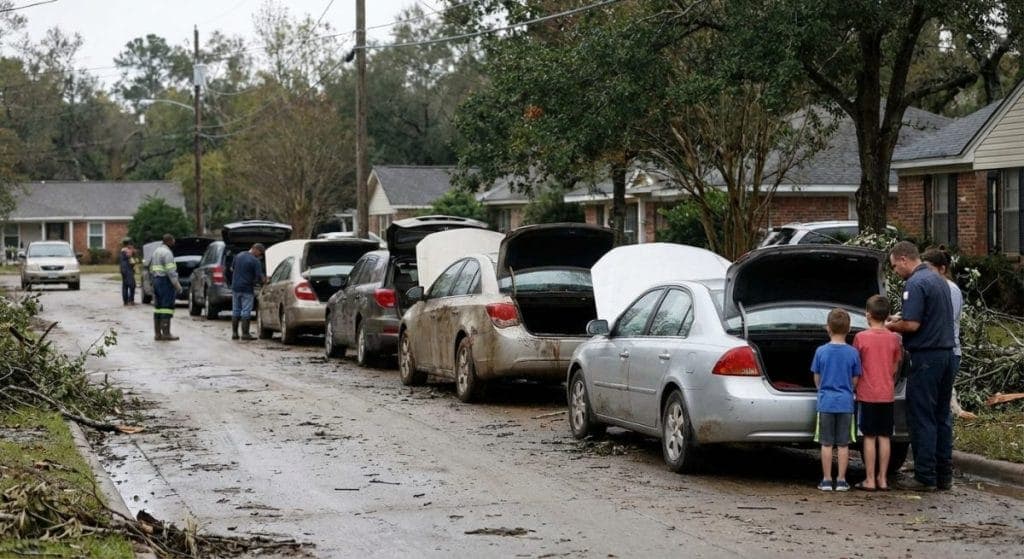
Every hurricane season, tens of thousands of vehicles get swallowed by floodwater, and a good chunk of them quietly end up back on the used car market. Tropical storms in the U.S. from June through August 2025 damaged an estimated 45,000 cars, according to CarFax. That’s the good news compared to the previous year’s 89,000. The bad news? Many of those flood-damaged vehicles get repaired, retitled, and resold to buyers who have no idea what they’re getting into.
What’s Happening
Hurricane season runs from June through November, and the damage it leaves behind doesn’t disappear when the storm moves on. Flooded vehicles get swept up by insurance companies, sent to salvage auctions, and sometimes repaired enough to look presentable. Then they travel. A vehicle flooded in Florida can show up on a lot in Ohio or Texas weeks later, with a cleaned interior and a vague vehicle history.
The NHTSA’s hurricane and flood-damaged vehicles resource warns that flood damage can affect a vehicle’s safety systems, airbags, anti-lock brakes, and electrical components in ways that aren’t always visible. Corrosion and rust can set in gradually, meaning a vehicle that drives fine in September might develop serious problems by winter.
What makes this tricky is that not every flood-damaged vehicle gets a branded title. Some vehicles are repaired privately, before an insurance company even gets involved, which means the damage never makes it into official records. That gap in the paper trail is exactly what predatory sellers exploit.
What This Means for Used Car Buyers
If you’re shopping for a used car right now, especially in states like Florida, Louisiana, Texas, or the Carolinas, the flood risk is real and recent. Prices on flood-affected vehicles often look attractive. That’s by design. Sellers know a low price moves inventory fast, and buyers assume a deal is a deal.
Flood damage doesn’t just mean a wet carpet. Water intrusion can destroy a vehicle’s electronic control modules, contaminate the transmission fluid, introduce mud and silt into the engine, and accelerate rust throughout the frame and underbody. Repairs can cost more than the vehicle is worth, and some damage simply can’t be fixed reliably.
If a vehicle’s insurance company declared it a total loss due to flood, it should carry a salvage or flood title brand. But again, that only happens when insurance is involved. Private sales and quick flips sometimes skip that step entirely.
Your best protection is treating every used vehicle purchase like it might have a hidden history, because some of them do. That means checking the VIN before you ever set foot on a lot.
What You Should Do
If your vehicle was totaled during a hurricane
Contact your insurance company immediately. Document everything with photos before any cleanup begins. Your insurer will assess the damage and determine whether the vehicle is repairable or a total loss. If it’s totaled, you’ll need to transfer your vehicle title to the insurance company. If that title was lost during the storm, contact your state’s DMV to get a replacement copy before the claims process gets too far along.
If your electric vehicle got wet
Don’t try to charge or start a flooded electric vehicle. Water and high-voltage battery systems are a serious safety risk. Contact your manufacturer and your insurance company before doing anything else. The NHTSA strongly advises against attempting to restart any flood-damaged vehicle, and that goes double for EVs.
If vehicle equipment was damaged during the storm
Document every item with photos and file a comprehensive claim with your insurance company. Keep receipts for any emergency repairs you had to make immediately after the storm. Most insurers want to see evidence of damage, not just your word for it.
How to spot a flood-damaged car before buying
Here’s what to check on any used vehicle you’re considering, especially after hurricane season:
- VIN history report: Run the vehicle’s VIN through a history service or use our free VIN lookup to check for salvage titles, flood alerts, and insurance records.
- Smell the interior: A musty, mildew smell that air fresheners can’t fully hide is a red flag. Flood damage leaves an odor that’s hard to eliminate.
- Check for mud and rust: Look under the seats, in the trunk, and under the hood for dried mud, rust on metal clips and brackets, or water stains on upholstery.
- Inspect the electrical system: Flickering lights, glitchy power windows, or a dashboard that throws random warning lights can all point to flood damage in the wiring.
- Look at the vehicle’s title: A salvage, rebuilt, or flood-branded title is a legal disclosure of serious past damage. Walk away if you see one and the price seems suspiciously low.
Always have an independent mechanic inspect any used vehicle before you buy. No vehicle history report catches everything, and a trained eye under the hood is worth more than any online check alone.
If you’re buying in a state that recently saw a major storm, treat every vehicle on the lot as a potential flood survivor until the VIN and inspection prove otherwise. That mindset could save you thousands in repair bills down the road.
Was this helpful?
Put it to work. Research your next car or browse our top gear picks.