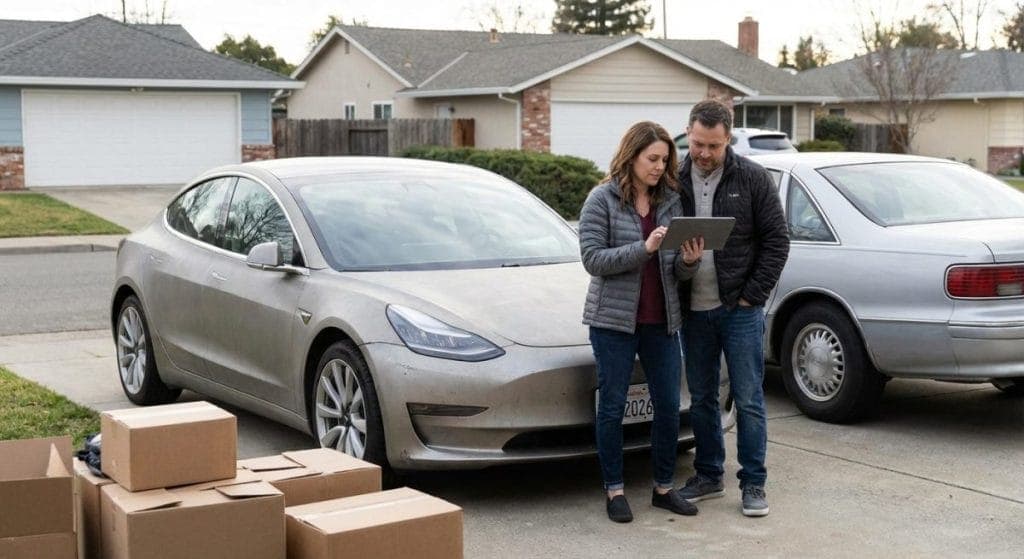
Tesla’s depreciation problem just got harder to ignore. According to JD Power’s ChromeData, Tesla vehicles now hold all three top spots for fastest depreciating cars in 2026, with popular models losing more than half their value since 2022. If you’re shopping for a used EV, this changes the math significantly.
What’s Happening
The used EV market is shifting fast, and Tesla is at the center of it. JD Power’s ChromeData data shows that the Tesla Model 3, Tesla Model S, and Tesla Model Y have all lost more than 50% of their value since 2022, placing Tesla models in all three podium positions for fastest depreciating vehicles of 2026.
Separate analysis from Carvira projects that used EV prices will keep sliding through mid-2026 as off-lease EV volumes peak, flooding the market with relatively young, gently used electric cars. The Audi Q8 e-tron leads luxury EV depreciation, dropping roughly 72% over five years from $74,400 down to around $20,958. The Tesla Model S is close behind, losing around 63% of its original value, dropping from $74,990 to approximately $27,835.
A separate study tracked Tesla Model 3 resale values over six years and found the EV retained just 23% of its original price. That’s a staggering depreciation curve for any vehicle, let alone one that sold for well over $80,000 at its peak. The Tesla Model X, the brand’s electric SUV, follows a similarly steep depreciation trajectory.
This isn’t just a Tesla story. EVs broadly depreciate faster than gas cars right now, driven by falling new EV prices, rapid technology updates, and buyer hesitation around battery longevity.
Why EVs Are Depreciating So Fast in 2026
A few forces are hitting at the same time. Tesla has cut new car prices repeatedly over the past two years, which instantly drags down what used Tesla models are worth. When you can buy a new Tesla Model 3 for less than you could two years ago, nobody’s paying 2022 prices for a used one.
There’s also a wave of off-lease EVs hitting the market in 2026. These are two- and three-year-old electric cars coming back from leases, often in excellent condition, and dealers are moving them at aggressive prices. That supply spike pushes depreciation even harder.
Battery technology anxiety plays a role too. Buyers aren’t sure how an EV battery holds up at 80,000 miles, and that uncertainty gets priced into resale values. The EV market simply doesn’t have the decades of real-world data that gas cars do, so used EV prices carry a risk discount.
Finally, the EV landscape is evolving quickly. A 2022 Tesla Model 3 feels noticeably less current than a 2025 model, and buyers notice. Software updates, range improvements, and new charging standards all make older EVs feel dated faster than older gas cars typically do.
Fastest Depreciating Electric Cars in 2026: The Short List
Based on available data from JD Power’s ChromeData and Carvira’s analysis, here are the EVs losing value fastest heading into 2026:
- Tesla Model 3 — retains as little as 23% of value after six years, the fastest depreciating EV by several measures
- Tesla Model Y — over 50% value loss since 2022, driven by Tesla’s own price cuts on new inventory
- Tesla Model S — approximately 63% depreciation over five years, dropping from roughly $74,990 to $27,835
- Tesla Model X — follows a similar steep curve as the Model S, with luxury EV depreciation compounding the drop
- Audi Q8 e-tron — roughly 72% lost over five years, the steepest depreciation of any luxury electric SUV tracked
Are Any EVs Holding Their Value?
Some EVs do hold value better than others. The Chevy Bolt, now relaunched at a lower price point, has steadier used values partly because its new price was never sky-high to begin with. The Ford Mustang Mach-E has shown more modest depreciation than Tesla models in several comparisons, though it still depreciates faster than comparable gas cars.
If you’re asking what car holds its value the most overall, the answer is still typically trucks and SUVs with proven powertrains. Used Toyota and Honda models consistently outperform EVs on resale. Within the EV segment specifically, vehicles with strong brand loyalty, limited used supply, and competitive new pricing tend to hold value better. That’s a short list right now.
What This Means for Used Car Buyers
Steep EV depreciation is actually good news if you’re buying, not selling. A used Tesla Model 3 that originally sold for over $80,000 might now be priced well under $30,000 depending on the year and mileage. That’s a fundamentally different value proposition than buying it new.
People are getting rid of their Teslas for a mix of reasons: some are upgrading to newer models, others are reacting to political and brand sentiment shifts, and many simply leased and are returning vehicles at end of term. The result is a growing supply of used Tesla models at prices that would have seemed impossible three years ago.
So is it worth buying a second-hand Tesla? For a lot of buyers, yes. But you need to go in with eyes open. The EV with the worst depreciation curve isn’t necessarily a bad buy. It just means someone else absorbed the big loss, and now you get the value. The catch is that if you plan to sell in three or four years, you’ll face the same brutal depreciation on the back end.
Run the numbers using our car loan calculator before committing. Total cost of ownership matters more than sticker price when cars depreciate this fast.
Battery Health: The Kingmaker of Used EV Values
Battery condition is the single biggest variable in any used EV purchase. Two Tesla Model 3 vehicles from the same year can have very different real-world ranges depending on how the battery was charged and stored. A battery consistently charged to 100% and frequently fast-charged will degrade faster than one managed carefully.
Tesla vehicles log battery data, and a pre-purchase inspection from an EV-specialist mechanic can pull degradation estimates. Don’t skip this step. A used EV with a degraded battery is worth significantly less than a clean one, and depreciation data doesn’t capture that difference at the individual car level.
For any used EV you’re considering, get a battery health report before you sign anything. This is the single most important inspection point that separates a great used EV deal from an expensive mistake.
How to Use Fast EV Depreciation to Your Advantage
If you’re buying a used electric car primarily to drive, not to flip, steep depreciation works in your favor. You’re buying at or near the bottom of the curve on a lot of these Tesla models, which means your own future depreciation loss is smaller in dollar terms.
Buying a used EV also means lower insurance premiums in most states compared to a new one, and federal used clean vehicle tax credits of up to $4,000 may apply depending on your income and the vehicle’s price. Check current eligibility requirements directly with the IRS, since income caps and vehicle price limits apply.
The sweet spot for buying a used Tesla or other fast-depreciating EV is typically the two- to four-year-old range. You get modern technology, a battery that still has strong capacity, and a price that reflects the steepest part of the depreciation curve already behind it.
What You Should Do
If a used Tesla or another fast-depreciating EV is on your list, treat the research phase seriously. Start with a free VIN lookup to check the vehicle’s history, confirm the title is clean, and see whether any open recalls are attached to that specific car. Open recalls on EVs are more common than many buyers realize, and the NHTSA recalls database is the fastest way to check.
Get an independent inspection from a mechanic who has EV experience, not just a general shop. Ask specifically about battery state of health, not just a visual inspection. Make sure charging equipment is included or factored into your budget if the car uses a non-standard connector.
Check used Tesla models and other EVs across our vehicle database to compare asking prices against what these cars are actually selling for right now. Depreciation data gives you the trend. Real listings give you the number to negotiate from.
The EV depreciation story in 2026 is moving fast. The buyers who understand it best are the ones who’ll get the most car for their money.
Was this helpful?
Put it to work. Research your next car or browse our top gear picks.