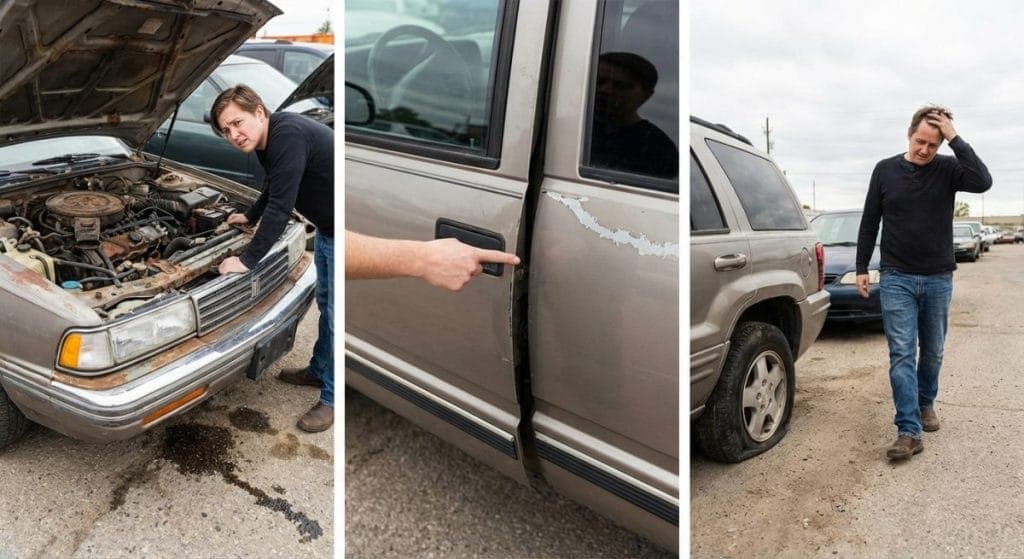
You found a used car that looks great, the price seems right, and the seller seems friendly enough. But something feels a little off. That gut feeling is worth listening to, and so is this guide.
Buying a used car comes with real risks. Knowing which red flags to walk away from can save you thousands of dollars and a mountain of headaches. Here’s what to watch for before you hand over a single dollar.
1. Open Recalls That Haven’t Been Fixed
Unresolved safety recalls are one of the most serious red flags you can find on used cars. If a manufacturer issued a recall and the previous owner never got it fixed, that problem is now yours the moment you drive off the lot.
You can check any vehicle’s recall status for free using the NHTSA recalls database. All you need is the VIN. If the car has open recalls and the seller isn’t offering to fix them before the sale, that’s a hard walk-away situation. Don’t let anyone convince you it’s a minor issue.
2. A Price That Seems Way Too Good
If a deal looks too good to be true on used cars, it almost always is. A seller pricing a vehicle thousands below market value isn’t doing you a favor. They’re usually hiding something, whether that’s flood damage, a salvage title, or mechanical problems they don’t want to disclose.
Use tools like the EPA fuel economy data site and free market pricing resources to get a ballpark on what similar vehicles are selling for. If this car is dramatically cheaper than everything else, treat it as a red flag until you can prove otherwise. A legitimate deal is still possible, but you need documentation to back it up.
3. Incorrect or Missing Title
This one is non-negotiable. If a seller doesn’t have the title for the car they’re selling, walk away immediately. Without a clean title in hand, they don’t legally own the car and can’t legally sell it to you.
Watch out for titles that show salvage, rebuilt, or flood designations. These cars have typically been in serious accidents or sustained major damage. They can be repaired and roadworthy, but they’re worth significantly less and can be harder to insure. A title that doesn’t match the VIN on the car is also a serious red flag that the vehicle may be stolen.
Run the VIN through our free VIN lookup tool before you get too excited about any vehicle. It takes two minutes and can reveal title problems you’d never spot by just looking at the car.
4. Suspicious Price Adjustments
You show up to look at a car listed at $12,000. Suddenly there are add-ons for a protection package, an administrative fee, or a “market adjustment” that bumps the price up by $1,500. This kind of bait-and-switch is a classic car buying red flag, especially at a high-pressure dealership.
Legitimate sellers are upfront about total cost. If the price keeps shifting, or if fees appear that weren’t mentioned in the listing, push back. Ask for an itemized breakdown in writing. If they get evasive or tell you it’s “standard practice,” trust your instincts and walk out. There are plenty of honest used cars for sale from sellers who respect your time.
5. A Seller Who Won’t Back Off
Pressure tactics are a car buying red flag that’s easy to miss in the moment because salespeople are trained to make urgency feel real. “This car won’t last the weekend.” “I’ve got two other people coming to look at it today.” “If you leave now, I can’t hold that price.”
A good seller wants you to feel confident in your purchase. They’ll give you space to think, let you take the car for a proper test drive, and welcome an independent inspection. If a seller refuses to let you bring in a mechanic or gets defensive when you ask questions, that tells you everything you need to know. Walk away. The right car won’t require you to rush.
6. A Sketchy Interior
The inside of a car tells a story. Stains that won’t come out, a musty or mildewy smell, and warped door panels are common signs of water damage or flooding. Flood-damaged used cars are notoriously problematic because moisture gets into the electrical system, the carpeting, and areas you can’t easily see or dry out.
Check under the seats and in the trunk for rust or watermarks. Smell the interior carefully. Look at the seatbelt clips and pedals for wear that doesn’t match the odometer reading. Excessive wear on a low-mileage car is a red flag that the odometer may have been rolled back. That’s fraud, and it’s more common than most buyers realize.
7. Mismatched Exterior Paint
Step back and look at the car from different angles, ideally in natural daylight. Panels that don’t quite match in color or texture are a sign the car has been repainted, often to hide accident damage. Run your hand along the body panels and feel for ripples or uneven surfaces.
Check the gaps between doors, the hood, and the trunk lid. Uneven gaps often mean panels were replaced after a collision. None of this automatically makes a car undriveable, but it does mean the seller needs to be upfront about what happened. If they claim the car has never been in an accident and the paint tells a different story, that’s a red flag you shouldn’t ignore.
A Carfax or similar vehicle history report can help here. If accident records show up on the report but the seller denies them, you’ve caught someone being dishonest. That alone is reason enough to keep shopping.
8. Unnecessary Finance Charges and Shady Loan Terms
Car buying gets complicated fast once financing enters the picture. Watch for extended loan terms designed to bury the true cost of the vehicle, mandatory add-ons bundled into the loan, and warranties rolled into financing without your explicit consent.
Always know your total out-the-door cost before signing anything. Use our car loan calculator to run the numbers yourself so you know what your monthly payment should look like at a fair interest rate. If the finance manager is moving quickly through paperwork and discouraging questions, slow everything down. You have every right to read what you’re signing.
Some dealerships also sell extended warranty products that sound like the manufacturer warranty but aren’t. Ask specifically whether any warranty is backed by the original manufacturer or by a third-party provider, and read the exclusions carefully before agreeing to anything.
9. Not Enough Paperwork
Legitimate sellers have documentation. Service records, the original window sticker, maintenance receipts, a vehicle history report, and the title should all be available or at least discussed. If a seller gets vague when you ask about service history, that’s a problem.
A Carfax or AutoCheck report is a good starting point, but it’s not a guarantee. Not every accident or title issue gets reported to these services. That’s why you should also pull a report using our free VIN lookup tool and cross-reference what you find. Missing paperwork isn’t always a dealbreaker, but it shifts the burden of proof onto you, and that means spending more time and money on verification before you buy.
10. General Signs of Defects
Some red flags you spot just by paying attention. Smoke from the exhaust that’s blue or white, a temperature gauge that climbs during a test drive, strange noises when turning or braking, and warning lights on the dashboard are all signs of underlying mechanical problems.
Never skip the inspection. Get used cars checked by an independent mechanic before you commit to a purchase. A pre-purchase inspection typically costs between $100 and $200 and can reveal problems that would cost thousands to fix. If a seller refuses to allow an inspection, that refusal is itself a red flag worth walking away from.
Also check the tires for uneven wear, which can point to alignment or suspension issues. Look under the car for fresh oil spots or drips. Pop the hood and look for corrosion, cracked hoses, or low fluid levels. These are all things a seller who takes care of their car would have addressed.
Shop Smart and Know When to Walk
The best protection against getting burned on used cars is preparation. Know the vehicle’s history before you show up. Understand what fair market value looks like. Bring someone with you, whether that’s a trusted friend or a professional. And never let urgency override your judgment.
Every red flag on this list has cost real buyers real money. The good news is that most of them are easy to spot once you know what to look for. Take your time, ask direct questions, and don’t be afraid to walk away. The right used car is out there, and it won’t require you to ignore your instincts to buy it.
Ready to start your search the right way? Browse used cars by make and find vehicles you can actually research before you commit.
Shop High-Quality Used Cars at Kareem Auto Sales Inc!
Kareem Auto Sales Inc offers used cars with the kind of transparency buyers actually deserve. Clean documentation, honest pricing, and vehicles you can inspect before you buy. That’s how car buying should work.
Browse Our Used Inventory
Here are a few examples of the used cars currently available through our inventory. Each one comes with vehicle history information so you can do your homework before making any decisions.
Used 2011 Chevrolet Volt
The 2011 Volt was a pioneer in plug-in hybrid technology. It offers a practical electric range for daily commutes with a gas engine as backup, which means you’re never stuck looking for a charging station. A solid choice if you want lower fuel costs without range anxiety. Check available Volt listings here.
Used 2013 Subaru Impreza Wagon
The 2013 Impreza Wagon brings standard all-wheel drive, solid fuel economy, and a practical cargo area in a compact package. Subaru’s all-wheel drive system makes it a strong pick for buyers in variable weather conditions. Always get an inspection on any used Subaru to check the head gaskets, which can be a known concern on older models. Browse Impreza listings here.
Used 2007 Nissan Murano
The 2007 Murano was one of the sharper-looking crossovers of its era, and it holds up well as a used vehicle when properly maintained. Check the CVT transmission carefully on this generation, as it can be expensive to replace if it hasn’t been serviced regularly. A full inspection and a clean vehicle history report are must-haves before buying any Murano at this age. See available Murano options here.
Was this helpful?
Put it to work. Research your next car or browse our top gear picks.