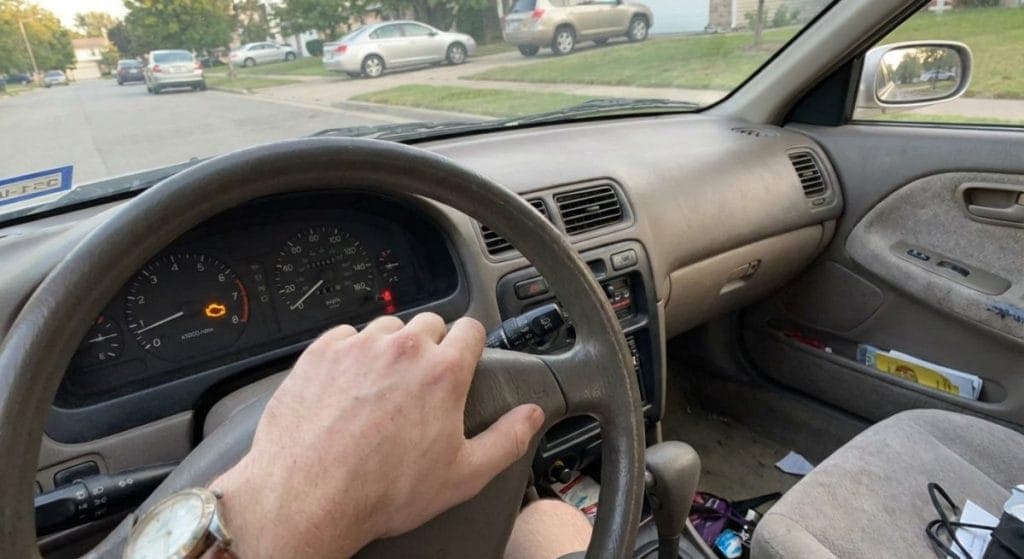
You found a used car you love, the price is right, and then you notice it: the check engine light is glowing on the dashboard. Now you’re wondering if you should walk away or if this is actually no big deal. The answer depends entirely on what’s behind that light, and this guide will help you figure that out before you hand over a single dollar.
What the Check Engine Light Is Actually Telling You
The check engine light is your car’s way of saying something in the engine management system isn’t behaving as expected. It could be a loose gas cap. It could also be a failing catalytic converter or a timing chain stretched past its service limit. That’s the frustrating part: the light looks the same whether the problem costs $15 or $4,000.
When the check engine light came on, the car’s onboard computer stored a diagnostic trouble code (DTC). That code points to a system or sensor that’s out of range. You can’t know what you’re dealing with until someone reads that code with a scan tool.
Here’s what separates a steady check engine light from a flashing one: a flashing light means stop driving. According to CARFAX, a flashing check engine light combined with shaking points to a serious engine misfire that can destroy your catalytic converter in minutes. A steady light is less urgent, but it still needs attention.
Never Assume the Light Bulb Is Even There
This is one of the oldest tricks in the used car playbook. Some sellers remove the check engine light bulb so you never see there’s a problem. The Reddit community at r/LifeProTips flagged this years ago, and it’s still happening today.
Before you even start the car for a test drive, turn the key to the “on” position without starting the engine. Every warning light on the dash should illuminate briefly as the car runs its self-check. If the check engine light doesn’t come on during that bulb check, be suspicious. The same goes for the ABS light and the airbag light. Repairs to those systems can cost more than the entire car is worth, especially on older vehicles from the 1990s.
Get the Code Read Before You Negotiate Anything
Reading the diagnostic code is your first real move. Most auto parts stores like AutoZone, Advance Auto Parts, and O’Reilly will read the code for free. You pull in, hand them your keys, they plug in a scan tool, and you walk out with a printed code and a basic description. That’s it. No appointment, no charge.
If you’re buying from a private seller, ask them to meet you at one of these stores. If they refuse, that tells you something. A seller who won’t let you check the code on a car that already has the light on is hiding something.
Once you have the code, you can look it up or ask a mechanic what it means in plain terms. Some codes are minor. A P0420 code, for example, often points to a failing catalytic converter, which can cost anywhere from a few hundred to over a thousand dollars to fix depending on the car. A P0300 series code means the engine is misfiring. A P0016 or P0017 code can indicate a timing issue, and that’s where things get serious fast.
Timing Codes Are a Red Flag Worth Taking Seriously
When you see a timing-related code, pay close attention. Timing covers the relationship between the crankshaft and camshaft in your engine. When that’s off, the engine doesn’t run efficiently. When it fails completely, you can be looking at bent valves, damaged pistons, or a complete engine replacement.
Timing chain and timing belt problems are expensive to diagnose and expensive to fix. If the check engine light is tied to a timing code, get a second opinion from an independent mechanic before you buy. Don’t let a seller tell you it’s “just a sensor.” Sometimes it is. But sometimes that sensor is telling the truth about a much bigger problem.
What to Do When the Engine Light Comes On During a Test Drive
If the check engine light came on mid-drive during your test, stop and think before you continue. A light that flickers on and off during acceleration could point to a vacuum leak or a sensor that’s borderline failing. A light that stays steady from the moment you start the car has usually been on for a while.
Ask the seller directly: how long has the check engine light been on? Watch their reaction as much as their answer. If they say “oh that just came on yesterday,” ask to see any recent receipts or repair records. A light that came on yesterday should have a fresh code and a clear explanation.
You can also use our free VIN lookup tool to check the vehicle’s history. A good history report can show past service records, accident history, and any reported issues that might line up with what you’re seeing on the dash.
Are Used Cars with the Check Engine Light On Worth Buying?
Sometimes, yes. A used car with an active check engine light isn’t automatically a bad buy. What matters is the specific code, the estimated cost to fix it, and how that repair cost affects the deal you’re getting.
If the light is on because of a faulty oxygen sensor, that’s typically a straightforward fix. Parts are cheap, and most shops can handle it in an hour. If you negotiate the repair cost off the asking price, you might end up with a solid car at a real discount.
If the light is pointing to something internal, like a failing transmission sensor, a major vacuum leak, or a timing component, the math changes. You need to know the fix cost before you can know if the car is worth buying at any price.
Here’s a simple way to think about it: get a repair estimate, subtract it from the asking price, and compare that number to what similar vehicles in good condition are selling for. If the adjusted price is still a deal, and the mechanic gives the rest of the car a clean bill of health, it might be worth moving forward.
Always Get an Independent Inspection
This applies to every used car you buy, check engine light or not. But when the light is already on, an independent inspection isn’t optional, it’s essential.
A pre-purchase inspection from a mechanic you trust (not one recommended by the seller) will cost you somewhere between $100 and $200 in most markets. That inspector will put the car on a lift, check the codes, look for leaks, check the timing belt or chain condition if accessible, and give you a written breakdown of what they find. That document is worth every penny.
Where can you take the car? Any independent repair shop works. You don’t need a dealership. In fact, an independent shop often gives you a more honest assessment because they’re not trying to sell you the car or protect a relationship with the seller.
What If the Light Comes On After You Already Bought the Car?
If the check engine light came on within days of your purchase, your options depend on where you bought the car and what kind of warranty or as-is agreement you signed.
Buying from a private seller with an as-is agreement typically means you own whatever problems come with the car. That’s the trade-off for a lower price. Buying from a licensed dealer is different. Most states require dealers to meet certain standards, and a check engine light appearing three days after purchase is a reasonable thing to push back on. As one experienced car sales professional noted on Reddit, a check engine light shouldn’t come on just three days after delivery, and many dealers will work to fix the issue even on as-is sales to protect their reputation.
If you’re financing the car, use our car loan calculator to make sure an unexpected repair bill doesn’t stretch your monthly budget to the breaking point. Factor in the cost to fix before you commit to monthly payments.
Specific Situations Worth Knowing About
Buyers in states like New Jersey often ask whether smog or emissions testing is a factor. It is. A car with an active check engine light will fail an emissions inspection in most states, including New Jersey. That means you can’t legally register it until the issue is resolved. Factor in the cost to fix before you finalize the deal, because registration delays and repair costs will fall on you the moment you sign.
If you’re shopping for a specific make or model with the check engine light already on, the stakes vary by vehicle. Some engines are known for minor sensor issues that trigger the light constantly. Others are known for catastrophic failures that start with the same symptom. You can browse used cars by make on our site to research common issues for specific models before you go shopping.
Quick Checklist Before You Buy a Car with the Check Engine Light On
- Confirm the check engine light bulb is actually present by checking it during the key-on self-test
- Get the diagnostic code read for free at an auto parts store
- Research the specific code to understand the likely cause and fix cost
- Run the VIN through our free VIN lookup tool to check for reported issues or accidents
- Have an independent mechanic perform a full pre-purchase inspection
- Get a written repair estimate and use it to negotiate the price
Make the Check Engine Light Work in Your Favor
Most buyers see the check engine light and panic. Smart buyers see it as a starting point. When you know how to read the situation, that glowing light can actually become leverage in the negotiation. A seller who wants to move the car knows the light is keeping other buyers away. That works in your favor.
The key is information. Get the code. Get the inspection. Know the fix cost. Then make a decision based on real numbers, not fear or assumption. A car with a minor issue and a fair price is often a better buy than a car with no warning lights and an inflated asking price.
Go get that code read today. It’s free, it takes ten minutes, and it tells you more about the car you’re considering than almost anything else you can check.
Was this helpful?
Put it to work. Research your next car or browse our top gear picks.