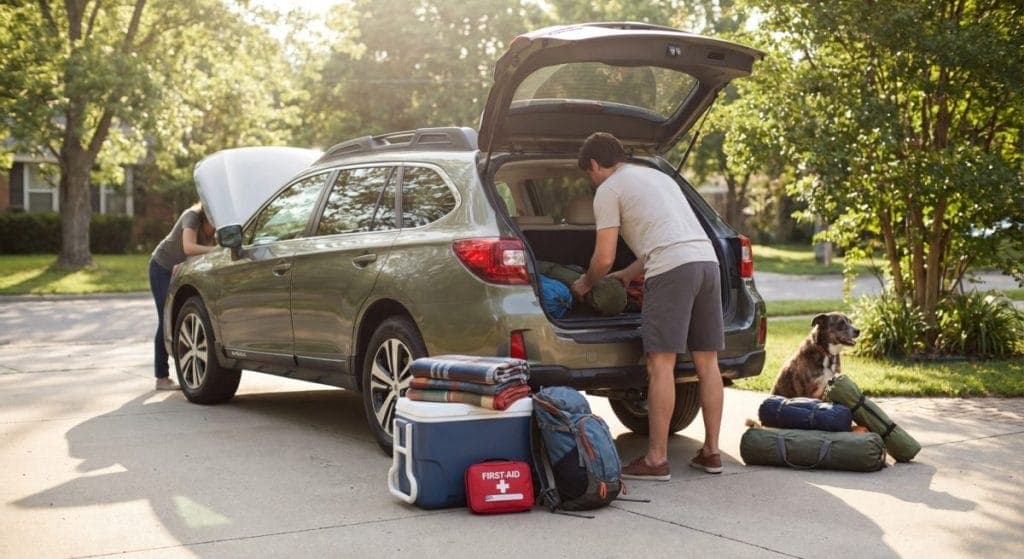
Summer road trips can go sideways fast if your vehicle isn’t ready for the heat, the highway, and the long haul. A solid checklist before you leave the driveway can be the difference between a great trip and a miserable breakdown on the side of the road.
This guide walks you through everything you need to check, fix, and pack before your next summer road trip. Whether you’re driving a used car you just picked up or one you’ve owned for years, the steps are the same.
How to Get Your Vehicle Road Trip Ready: A Summer Maintenance Checklist
Before we get into the specific steps, let’s be clear about something. A checklist only works if you actually go through it. Print it out, save it on your phone, or grab a summer road trip car prep checklist PDF from a trusted source like AAA. The format doesn’t matter as much as the follow-through.
The checklist you use should cover the core mechanical systems, your emergency gear, and your documents. Any version that hits those three areas will serve you well. If you’re not sure which summer road trip car prep checklist to use, the one in this article is a solid starting point for most drivers.
Step 1: Key Systems to Inspect — Tires, Fluids, Brakes, Battery
This is the mechanical foundation of your pre-trip prep. Skip this part and you’re gambling with your safety on every mile of the trip.
Tires
Your tires are the only thing between your vehicle and the road. Start by checking your tire pressure when the tires are cold, before you’ve driven more than a mile or two. Refer to the sticker inside your driver’s door jamb for the correct PSI, not the number printed on the tire sidewall.
Hot summer pavement and highway speeds both affect tire pressure and wear. Under-inflated tires run hotter, wear unevenly, and hurt your fuel economy. Over-inflated tires reduce grip. Neither is what you want on a long road trip.
Beyond tire pressure, inspect each tire for tread depth. A quick way to check: stick a quarter into the tread groove with Washington’s head pointing down. If you can see the top of his head, the tread is getting low. Also look for cracks, bulges, or uneven wear patterns, which can signal alignment or suspension problems.
Don’t forget the spare. A lot of people inspect everything else and then discover their spare is flat when they actually need it. Check the pressure on that one too.
Fluids
Your vehicle runs on multiple fluids, and heat puts all of them under extra stress. Go through each one before the trip.
- Engine oil: Check the level and condition. Dark, gritty oil is overdue for a change. If you’re within a few thousand miles of your next oil change interval, just do it before you leave.
- Coolant: This is the big one for summer. Your coolant keeps the engine from overheating, and it works hardest when outside temperatures are high. Check the reservoir level and look at the condition. Old, degraded coolant can actually accelerate corrosion inside the cooling system.
- Brake fluid: Low or contaminated brake fluid affects your stopping power. Check the reservoir under the hood and make sure the level sits between the min and max marks. Brake fluid absorbs moisture over time, which lowers its boiling point. That’s a real problem on long downhill stretches.
- Power steering fluid: Low power steering fluid makes handling noticeably harder, especially at low speeds.
- Windshield washer fluid: Sounds minor, but summer driving means bugs, dust, and haze. You’ll use more of this than you think. Top it up before the trip and throw a spare bottle in the trunk.
- Transmission fluid: Less frequently checked, but worth inspecting before a long trip, especially in older vehicles.
Brakes
Your brakes deserve a proper inspection before any significant road trip. Listen for squealing or grinding when you stop. Feel for vibration through the pedal or a vehicle that pulls to one side. Any of those symptoms means you need a brake inspection before you go anywhere.
Even without obvious symptoms, if it’s been more than a year since anyone looked at your brakes, have a mechanic inspect the pads and rotors. Brake pad replacement is cheap compared to what happens when you need your brakes and they let you down.
Battery
Heat is actually harder on a car battery than cold weather is. A battery that’s been struggling through winter and spring may not survive a hot summer road trip. Check the battery terminals for corrosion, which looks like a white or bluish crust around the cable connections.
If your battery is three years old or more, have it tested at any auto parts store. Most will do it for free. A weak battery can leave you stranded at the worst possible time, usually in a parking lot in a hot, unfamiliar city.
Step 2: How to Prepare for Long Drives
A long trip puts different demands on a vehicle than daily commuting does. Think about the conditions your car will face: sustained highway speeds, heat, hills, loaded with passengers and luggage.
Get your air conditioning system checked if it hasn’t been serviced recently. A weak AC is miserable in summer heat, especially if you’re crossing desert or plains states. If it’s blowing warm or just not cold enough, have the refrigerant level checked and the system inspected before you leave.
Check all your lights, including headlights, taillights, turn signals, and brake lights. Road trips often involve early morning or late evening driving. You don’t want a burned-out bulb getting you pulled over or, worse, making you invisible to other drivers.
Look at your windshield for chips or cracks. A small chip can spread into a full crack from the vibration of highway driving or a sudden temperature change when you blast the AC. Many auto glass shops will fill a chip for free if you have comprehensive insurance coverage.
Check your wiper blades too. Summer afternoon thunderstorms are real, and old rubber leaves streaks right across your line of sight at the worst moment. Replacing wiper blades is a five-minute job and costs under $30 for most vehicles.
If you’re buying a used car specifically for an upcoming summer road trip, always get a pre-purchase inspection from an independent mechanic first. Use our free VIN lookup tool to check for open recalls, accidents, and ownership history before you commit.
Step 3: Must-Have Emergency Gear for the Road
Even a perfectly maintained vehicle can have problems. A tire blows out. A hose splits. You pick up a nail somewhere in rural Nevada. Your roadside checklist needs to cover what happens when things go wrong far from help.
Pack a basic emergency kit that includes:
- Jumper cables or a portable jump starter
- A basic tool kit (screwdrivers, pliers, adjustable wrench)
- Tire pressure gauge and a portable inflator
- Reflective triangles or road flares
- First aid kit
- Flashlight with fresh batteries
- Water and a few non-perishable snacks
- A physical map of your route, because cell service disappears in places you wouldn’t expect
A roadside assistance membership from AAA or a similar provider is worth every cent if you do frequent road trips. One tow from the middle of nowhere will cost more than a year’s membership fee.
Keep a second map or printed directions in the car as a backup. Phone batteries die, GPS apps crash, and signal drops in mountain passes and rural stretches. Paper doesn’t do any of those things.
Step 4: Get Your Docs and Tech in Order
Mechanical prep gets most of the attention, but the paperwork side of a trip matters too. Make sure your registration, proof of insurance, and driver’s license are current and in the vehicle before you leave.
If you’re financing the vehicle, keep the loan company’s contact info accessible. If you’re still shopping and need to understand what a monthly payment looks like for a used car purchase, run the numbers through our car loan calculator before you commit.
Update your GPS and any navigation apps before the trip, not during it. Download offline maps for your route in case you lose connectivity. Set up your phone mount so you’re not holding the phone to navigate, which is illegal in most states and genuinely dangerous.
Check that your Bluetooth, backup camera, and USB charging ports are all working. If you’re traveling with kids or passengers, a working entertainment system isn’t a luxury, it’s a sanity preserver on a twelve-hour drive.
Step 5: Comfort and Convenience Final Touches
The mechanical side of your checklist keeps you safe. This part keeps you sane. Long road trips wear on you, and small things make a real difference over hundreds of miles.
Clean out the interior before you load the vehicle up with trip gear. A cluttered car gets chaotic fast when you add luggage, snacks, and passengers for multiple days. Give the seats a quick vacuum and wipe down the surfaces so you’re starting fresh.
Think about seat comfort, especially if you’re driving the bulk of the miles. A lumbar support cushion or a seat pad can save your back on a trip that spans multiple days. Set your mirrors and seat position before you leave, not while merging onto the interstate.
Bring a small cooler for drinks and snacks. Stopping at gas stations for drinks multiple times a day adds up fast and wastes time. Pack a bag for trash so the car stays livable.
Step 6: When to Schedule a Pre-Trip Service
If your vehicle is due for any maintenance in the next few thousand miles, handle it before the trip, not after. Oil changes, tire rotations, air filter replacements, and belt inspections are all worth doing ahead of a long trip rather than hoping they hold until you get back.
Book your service appointment at least a week before your departure date. Summer is a busy time at most shops, and last-minute appointments aren’t always available. If the mechanic finds something during the inspection, you want time to address it before you’re supposed to leave.
Be upfront with the service advisor. Tell them you’re preparing for a long road trip and ask them to flag anything that looks marginal. A good shop will catch things you’d miss and can prioritize what needs immediate attention versus what can wait.
Drive Into Summer With Style and Safety
Getting your vehicle road-trip ready isn’t complicated, but it does require actually doing the work before you’re sitting on the side of the highway in 95-degree heat. Work through this checklist a week or two before your departure date, not the night before.
The best summer road trips happen when the car disappears into the background and the experience takes over. That only happens when the vehicle is reliable, the gear is packed, and the planning was done right.
Want to make sure the used car you’re taking on a summer road trip doesn’t have any hidden surprises? Run it through our free VIN lookup tool to check its history before you trust it with a long trip. And if you’re looking at specific makes and models before buying, browse used cars by make to compare your options.
People Also Ask
Which summer road trip car prep checklist should I use?
Use any checklist that covers the four core areas: mechanical systems (tires, fluids, brakes, battery), emergency gear, documentation, and comfort items. The checklist in this article covers all of those. If you want a printable version, AAA publishes a solid pre-trip car care checklist on their website that’s been vetted by automotive professionals.
Is a summer road trip car prep checklist really necessary?
Yes, especially for used vehicles or anything that hasn’t been serviced recently. Heat accelerates problems with tires, batteries, and cooling systems that might not show up during everyday city driving. A checklist makes sure you don’t skip something important in the rush of trip planning.
How far in advance should I go through my summer road trip checklist?
Aim for at least one to two weeks before your departure date. That gives you time to book a service appointment and get any repairs done before you’re on a deadline. Waiting until the day before leaves you with no options if something needs fixing.
Do I need a different checklist for a short trip versus a long road trip?
The same checklist applies, but a longer trip makes every item more critical. On a short trip, a marginal battery might be fine. On a week-long road trip through remote areas, that same battery is a real risk. Scale your inspection depth to the length and remoteness of the drive.
What fluids should I check before a summer road trip?
At minimum, check engine oil, coolant, brake fluid, power steering fluid, and windshield washer fluid. Transmission fluid is worth checking too if you’re driving an older vehicle or haven’t had it inspected recently.
Was this helpful?
Put it to work. Research your next car or browse our top gear picks.