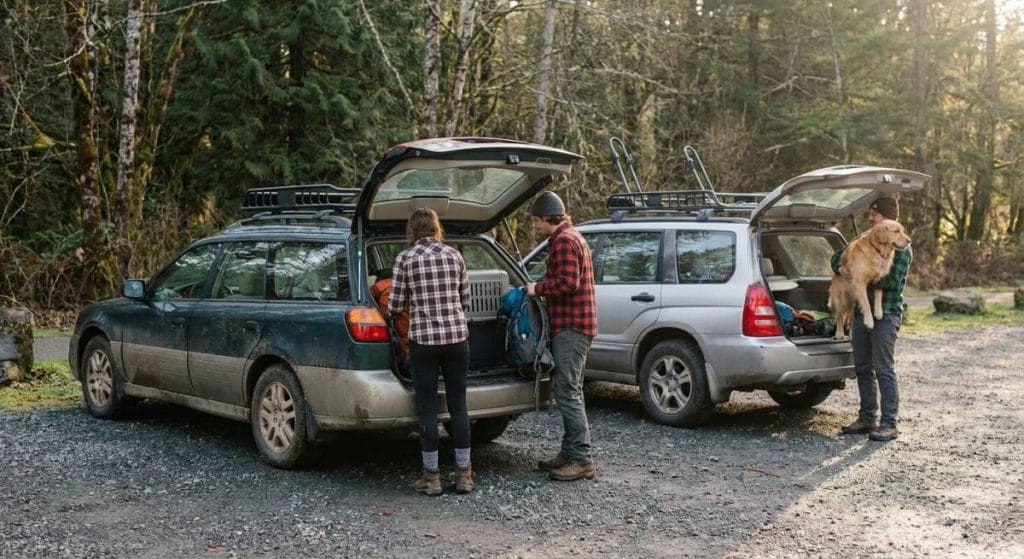
You’ve narrowed it down to two Subarus, and now you’re stuck. The Outback and the Forester look almost identical on paper, and used listings aren’t making it any easier. Here’s what actually separates them, and which one makes more sense for your situation.
Why These Two Get Compared So Often
The forester and outback come from the same family, share the same all-wheel-drive platform, and often land in the same price range on the used market. That’s exactly why buyers get confused. They feel similar to drive, they’re similarly sized, and both carry the Subaru reputation for durability and AWD capability.
But they’re not the same vehicle. The outback is technically a wagon, though most people think of it as an SUV. The forester is a proper compact SUV. That difference in body style creates real differences in how they feel on the road and how useful they are day to day.
Size and Cargo: Closer Than You Think
The forester has a surprising advantage here. Its boxy shape and upright roofline give it more headroom and a more practical cargo area than the outback’s sleeker profile suggests. The forester’s cargo hold is square and easy to load, which matters when you’re hauling gear, groceries, or a dog crate.
The outback isn’t far behind on cargo, but the sloped rear roofline eats into usable vertical space. If you’re regularly moving bulky items, the forester wins on practicality. If you’re mostly carrying bags and smaller loads, both handle it fine and the difference in cargo capacity won’t matter much day to day.
Rear seat headroom also favors the forester. Taller passengers in the back will feel the difference. The outback is more comfortable for passengers in the front, where the lower, car-like seating position actually feels more refined.
The Driving Experience: Outback Feels More Like a Car
This is where the two really split. The outback sits lower to the ground and drives more like a car. It’s planted, smooth on the highway, and less SUV-like in corners. If you spend a lot of time on the interstate or in suburban traffic, the outback’s ride quality feels polished.
The forester sits higher, with a more upright driving position. You get better visibility, easier entry and exit, and a view of the road that many drivers actually prefer. It’s not as sporty as the outback, but it’s not supposed to be. The forester is built around utility and practicality, not driving feel.
On the used market, if you find an outback with the turbocharged engine, that changes the equation. The turbocharged outback trims offer noticeably more power and are genuinely more fun to drive. The forester never got that turbo option in recent generations, so if performance matters to you, the outback has a clear edge in higher trims.
Which Model Years Should You Target?
Both the forester and outback went through a major redesign in 2019, switching to Subaru’s Global Platform. That generation is the sweet spot for used buyers right now. The 2019 and newer forester and outback models are more refined, more fuel efficient, and better equipped with safety tech than earlier generations.
For the forester, the 2019 to 2022 model years are strong used picks. The forester got a full redesign in 2019 with a more spacious interior, better fuel economy, and standard EyeSight driver assistance on most trims. Earlier forester models (2014 to 2018) are also solid used buys if the price is right, though the older turbocharged forester XT from that era has a mixed reputation for engine maintenance costs.
For the outback, the 2020 to 2023 range hits the sweet spot. The 2020 outback brought a fully updated interior with a larger touchscreen and improved tech. The turbocharged outback Onyx XT and Outback XT trim levels from this era offer real power without the reliability concerns of older turbo setups.
Before buying any used forester or outback, run a free VIN lookup to check the vehicle history. You want to know about accidents, title issues, and how many owners it’s had.
Reliability: Both Are Strong, But Check the Specifics
Subaru’s reputation for reliability is mostly earned, but it’s not unlimited. The big thing to know about both the forester and the outback is head gasket issues on older models. The 2.5-liter naturally aspirated engine used in both vehicles had documented head gasket problems in the EJ-series engine era, which covers models roughly from 2000 to 2012. If you’re buying a forester or outback from that period, get a compression test and have the coolant system inspected.
From 2013 onward, Subaru switched to the FB-series engine, which addressed many of those issues. Oil consumption was still a complaint on some forester and outback models through around 2017, so check service records for top-ups between oil changes on anything from that window.
The 2019 and newer generation forester and outback use updated engines that are much more trouble-free based on real-world owner feedback. Always get an independent inspection before buying any used vehicle, regardless of how clean the listing looks.
You can check for open recalls on any used forester or outback through the NHTSA recalls database.
Fuel Economy: Basically a Tie
This is one area where the forester and outback are genuinely close. Both use similar naturally aspirated 2.5-liter engines in their base configurations and return comparable fuel economy figures. According to EPA fuel economy data, recent base forester and outback models land around 26 to 33 mpg combined, depending on the trim and driving conditions.
The turbocharged outback trims give up a few miles per gallon in exchange for that extra power. If efficiency is your top priority, the base forester is a smart choice and its fuel economy has been consistently competitive for a compact SUV.
Off-Road Capability: The Outback Has More Ground Clearance
Here’s a surprise for a lot of buyers. The outback actually sits higher off the ground than the forester in most configurations, giving it a slight edge on rough terrain. That’s unusual because the forester looks like the more rugged, SUV-shaped vehicle.
Both use Subaru’s Symmetrical All-Wheel Drive, which is standard on every trim of both vehicles. Neither is a serious off-roader, but both handle unpaved roads, light trails, and snowy conditions confidently. If you regularly use forest service roads or gravel paths, the outback’s extra clearance is a genuine advantage. For most buyers, though, the difference isn’t enough to sway the decision.
Trim Levels and What to Look For Used
On the used market, both the forester and the outback come in a wide range of trim levels that affect how well-equipped the vehicle is. For the forester, the Premium and Sport trims hit a nice balance of features and price. The Touring trim adds luxury touches but commands a higher price used. The base forester trim is well-equipped but lacks some convenience features.
For the outback, the Premium trim is the practical used buy. It adds heated front seats, a power driver’s seat, and blind-spot monitoring without jumping to the higher price of the Limited or Touring trims. The outback XT trim levels add the turbo engine and are worth the premium if you find one in good condition.
When you’re shopping, browse used Subarus by make to compare what’s actually available in your area before committing to one version over the other.
Who Should Buy the Forester
The forester is the better pick if you prioritize cargo space, rear passenger comfort, and an upright driving position. It’s genuinely easier to get in and out of, which matters for older drivers or anyone with mobility concerns. The forester’s visibility is excellent, making it easier to maneuver in tight parking lots and urban environments.
Families with kids in car seats often prefer the forester because the rear doors open wide and the ceiling height makes buckling kids in much less of a workout. The forester’s boxy cargo area also makes it easy to load strollers, sporting equipment, and anything else that needs a flat, square space.
Who Should Buy the Outback
The outback makes more sense if you spend a lot of time on the highway and want something that rides and handles more like a sedan. It’s more comfortable on long trips, and the turbocharged outback trims make it genuinely enjoyable to drive in a way the forester never quite matches.
If you’re comparing this to 2026 models and wondering whether to buy new versus used, the current outback generation holds its value well, which means used examples from 2020 to 2022 are priced accordingly. Factor that in when you’re running the numbers through a car loan calculator to see what fits your budget.
Before You Buy: Your Test Drive Checklist
A test drive is non-negotiable for either of these vehicles. When you test drive a used forester, pay attention to any hesitation on acceleration and listen for rattles from the cargo area. The forester’s interior can develop squeaks over time, especially in higher-mileage examples.
When you test drive an outback, specifically test the infotainment system. The 2020 and newer outback models switched to a touchscreen-heavy interior that some owners find frustrating because basic functions like the climate controls went fully digital. It’s not a dealbreaker, but you should know if it bothers you before you buy.
A second test drive with a trusted mechanic riding along is always worth the time, especially on any turbocharged outback trim where you want someone who knows what to listen for.
The Bottom Line
The forester wins on practicality, interior space, and everyday usability. The outback wins on driving feel, highway comfort, and performance potential in the turbo trims. Neither is a bad choice. Both the forester and outback have strong used market track records and Subaru’s AWD system is genuinely confidence-inspiring in poor conditions.
Pin down how you actually use a vehicle most of the time. If you’re hauling cargo and passengers, go forester. If you’re logging highway miles and want something that drives well, go outback. Then run the VIN, get the inspection, and make sure the specific example you’re buying has been taken care of. The model matters less than the individual vehicle’s history.
Was this helpful?
Put it to work. Research your next car or browse our top gear picks.