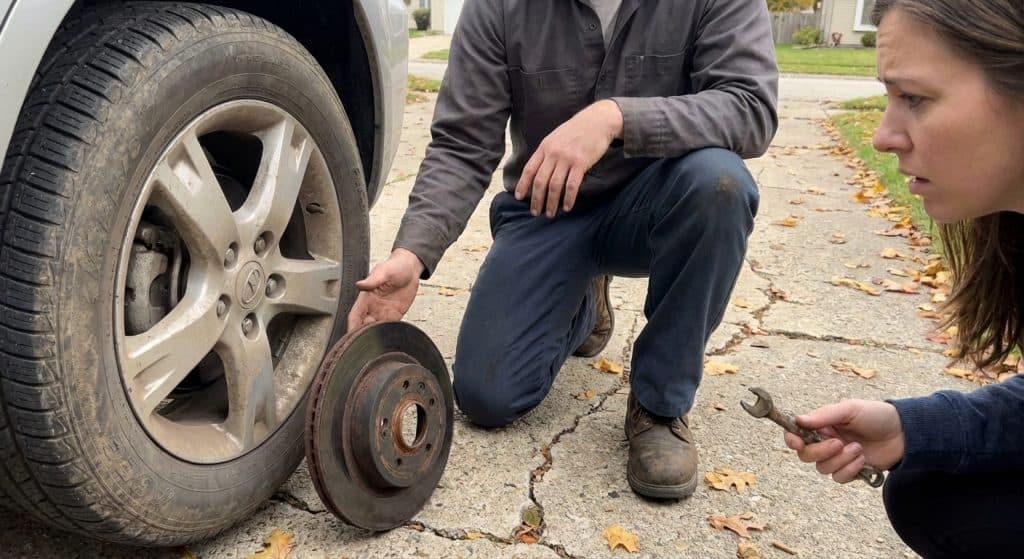
Your brakes are the most important safety system on your car, and they don’t fail without warning. They give you plenty of signals first. The problem is most people don’t know what to look for until something goes seriously wrong.
Whether you’re buying a used car or maintaining one you already own, knowing the signs you need new brake pads can save you money, protect your rotors, and honestly, save your life. Here’s everything you need to know.
Visible Wear and Tear on Your Brake Pads
You don’t always need to hear something to know your brakes need attention. Sometimes you can just look. On most vehicles, you can see the brake pad through the wheel spokes without removing the tire.
Look at the pad pressed against the rotor. If the pad appears less than a quarter-inch thick, it’s time to get them inspected or replaced. New brake pads typically start at about half an inch. Anything below that quarter-inch mark means you’re running low, and anything approaching bare metal is a serious problem.
While you’re looking, check the rotor surface too. If the rotor looks deeply grooved, unusually thin, or has thick rust ridges around the edge, the rotor itself may need replacement alongside the pads. This is how you start to tell if you need new brake pads or rotors, and a visual check is the easiest first step.
High-Pitched Screeching When You Brake
That high-pitched squeal you hear when you press the brake pedal isn’t random. Most brake pads have a small metal wear indicator built right into them. When the pad wears down to a certain point, that indicator contacts the rotor and makes a deliberate screeching noise to get your attention.
Think of it as your car’s built-in alarm system. The squeal is telling you the brake pads are getting thin and need to be replaced soon. You don’t need to panic, but you do need to act. Ignoring it for weeks turns a straightforward pad replacement into a much more expensive rotor job.
If you hear a high-pitched noise consistently when braking, get it checked out within the week. If it’s intermittent and only happens first thing in the morning, that could just be light surface rust burning off after the car sat overnight. That kind of noise usually disappears after a few stops.
Screeching Despite New Brake Pads
Here’s something that confuses a lot of people. Sometimes a brake squeal shows up right after a fresh brake job. If you just had new pads installed and you’re still hearing noise, don’t assume the shop did something wrong.
New brake pads sometimes need a break-in period. The pad material and rotor surface need a few heat cycles to properly mate together. This is called bedding the brakes, and some squeal during this process is normal and temporary.
That said, if the noise persists beyond the first few days of driving, it’s worth going back to whoever did the work. The pads may not have been seated correctly, the wrong pad compound might have been used, or there could be a caliper issue that wasn’t caught during the original repair.
Slow Stopping Response
If your car takes noticeably longer to stop than it used to, that’s a clear sign something in your brake system is off. This feeling is sometimes called brake fade, and it’s not something to dismiss as just the car being old.
Worn brake pads have less friction material to grip the rotor. Less grip means more stopping distance. That extra few feet of distance might not matter in a parking lot, but at highway speeds it absolutely does.
Brake fade can also come from overheated brake fluid, especially if you’ve been doing a lot of hard braking on a long downhill. But if you’re noticing reduced stopping power in normal everyday driving, worn pads are the most common culprit. Get it checked before it gets worse.
Brake Pedal Vibration
A vibrating brake pedal is one of those symptoms that points directly at your rotors, but the root cause is often worn or uneven brake pads. When the brake pad material wears unevenly across the rotor surface, it leaves deposits that cause the pedal to pulse under your foot when you apply pressure.
You might feel it as a rapid shudder, almost like ABS activating on a dry road. If your ABS light isn’t on and the road isn’t wet or icy, that pulsing sensation is a red flag. Warped rotors are often the diagnosis, but replacing the brake pads at the same time is almost always necessary too.
Don’t assume a vibrating pedal is just a minor annoyance. A warped rotor reduces the consistency of your braking, which affects how confidently the car stops in an emergency. This is one of those problems that gets worse the longer you wait.
Extremely Sensitive or Insensitive Brakes
Pay attention to how the pedal actually feels under your foot. Brakes that grab aggressively the instant you breathe on the pedal, or brakes that barely respond even when you push fairly hard, are both signs of trouble.
Overly sensitive brakes can indicate uneven pad wear, contaminated brake pads, or a sticking caliper. Brakes that feel spongy or unresponsive might point to low brake fluid, a fluid leak, or pads that are completely worn through to the backing plate. Either extreme means the braking system isn’t performing the way it should.
On mountain bikes and other bicycles, the same logic applies if you’re wondering how to tell if you need new brake pads on a bike. If your rim brake pads feel glazed and don’t bite the way they used to, or if your disc brake pads are contaminated with oil, they need to be replaced. The symptoms translate across vehicle types.
A Puddle in Your Driveway
Most people associate driveway puddles with oil leaks, but a small puddle near one of your wheels can also point to a brake fluid leak. Brake fluid is typically clear to slightly yellow and has a somewhat oily feel.
A brake fluid leak often means a caliper seal or piston has failed. When that happens, the caliper can’t maintain the hydraulic pressure needed to push the brake pad firmly against the rotor. The result is a brake pedal that sinks toward the floor and brakes that feel mushy or unresponsive.
This isn’t a “wait and see” situation. A brake fluid leak is a safety issue that needs immediate attention. If you notice any fluid near your wheels and your pedal feels soft, don’t drive the vehicle until it’s been inspected by a mechanic.
Heavy Grinding Sound
If the squeal was the warning, the grind is the emergency. A deep, metal-on-metal grinding noise when you brake means the pad material is completely gone. The bare metal backing plate is now making direct contact with the rotor.
At this point, you’re not just replacing brake pads. You’re almost certainly replacing rotors too, because grinding metal chews through rotor surfaces fast. What started as a simple brake pad replacement has now become a significantly more expensive job.
Grinding can also signal that a small stone has gotten lodged between the pad and rotor. That happens occasionally and usually resolves itself after a few stops. But if the grinding is consistent every time you brake, assume the worst and get it checked immediately.
Pulling to One Side When Braking
When you hit the brakes and the car pulls left or right, the brake system is applying uneven force to the wheels. The most common reason is a sticking caliper on one side, which keeps that brake pad pressed against the rotor even when you’re not braking. This causes uneven wear and uneven stopping force.
Uneven brake pad wear across an axle can also cause pulling. If one pad is more worn than its counterpart on the opposite wheel, the braking force won’t be balanced. The car pulls toward the side with more braking power.
Either way, pulling while braking is a clear sign the brake system needs inspection. It’s also worth checking the brake pads on both sides of the axle whenever you replace them. Always replace pads in pairs, axle by axle, so both sides wear evenly going forward.
What Happens When You Drive With Worn Brakes?
Beyond the obvious safety risk, driving on worn brake pads damages other components in the brake system. Once the pad material is gone, the metal backing plate contacts the rotor directly. That destroys rotor surfaces fast, turning a $150 pad replacement into a $400 or $600 job once you factor in new rotors.
Continued neglect can damage calipers too. A seized or overheated caliper isn’t cheap to replace, and at that point you’re looking at a full brake system overhaul. The brake system is one of those things where catching the problem early is almost always less expensive than waiting.
According to the NHTSA recalls database, brake-related defects are among the most commonly tracked safety issues in passenger vehicles. Keeping your own brake system in good shape matters for everyone on the road, not just you.
How to Know if You Need New Brake Pads and Rotors Together
This is one of the most common questions people ask, especially when buying a used vehicle. The short answer is that rotors don’t always need to be replaced at the same time as pads, but they often do.
A good mechanic will measure rotor thickness and compare it to the manufacturer’s minimum specification. If the rotor is at or below minimum thickness, it needs to be replaced regardless of how the surface looks. If it’s above minimum but heavily scored or grooved from metal-on-metal contact, replacement makes sense too.
A useful rule of thumb: if you’re already replacing pads because of a grinding noise, replace the rotors at the same time. The grinding has already done damage. Trying to save money by keeping scored rotors will just chew through your new pads faster.
Checking Brakes When Buying a Used Car
If you’re shopping for a used car, brake condition should be near the top of your inspection checklist. Ask specifically about recent brake work. Look through the wheel spokes to eyeball pad thickness. Listen for any noise on a test drive, especially during hard stops.
A pre-purchase inspection from an independent mechanic will include a brake check, and that alone can save you from buying a car that needs $600 in brake work the week after you drive it home. Always get that inspection before handing over money.
You can also run a free VIN lookup before buying to get a clearer picture of the vehicle’s history. It won’t tell you the current pad thickness, but it can flag accidents, service records, and title issues that affect how confidently you can trust what the seller tells you.
If you’re budgeting for a used car purchase and want to factor in potential repair costs, our car loan calculator can help you figure out what monthly payment actually makes sense given the full cost of ownership. And if you want to start browsing specific makes, you can browse used cars by make and filter down from there.
Brake maintenance is one of the most straightforward things you can stay on top of as a car owner. The signs are usually obvious if you know what to listen and look for. Catch it early, fix it promptly, and you’ll spend a lot less money over the life of the vehicle.
Was this helpful?
Put it to work. Research your next car or browse our top gear picks.