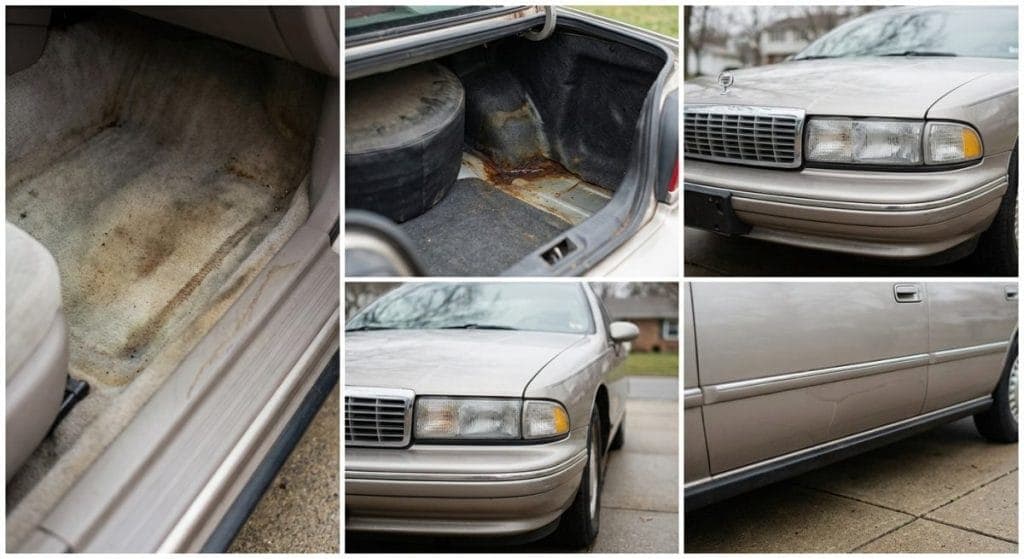
Flood-damaged cars are one of the worst things you can unknowingly buy on the used car market. They look fine on the outside, but the damage runs deep, and the repair bills can follow you for years.
After major storms and hurricanes, thousands of flood-damaged vehicles get cleaned up, detailed, and quietly moved into the used car market, sometimes across state lines, sometimes with a clean title. Knowing the signs before you buy could save you thousands of dollars and a whole lot of headaches.
What Are the Signs a Used Car Has Been in a Flood?
There are several physical clues that can tell you whether a car has spent any time underwater. Some are obvious. Others are easy to miss if you don’t know what you’re looking for. Here’s what to check before you ever consider buying.
A Musty or Moldy Smell Inside the Car
Your nose is one of your best tools here. A car that’s been flooded will often have a musty, mildewy smell that’s hard to fully eliminate, even after a professional detail. Sellers sometimes use air fresheners or perfume sprays to cover it up. If a car smells unusually strong or artificially fresh, that’s a sign something is being masked.
Take a deep breath inside the cabin with all the doors closed. Trust your instincts. If it smells damp, earthy, or like something died under the seat, walk away.
Check the Carpets and Upholstery Closely
Lift the floor mats and press your hand into the carpet underneath. Flood cars often have carpet that feels slightly damp, stiff, or gritty with fine silt or dirt embedded in the fibers. You might also see a faint waterline stain low on the door panels or along the base of the seats.
Look underneath the seats too. Rust on the seat rail brackets or the floor bolts is a strong sign of water exposure. In a typical used car, those areas should just be dusty, not rusty.
Rust in Places That Shouldn’t Be Rusty
A little surface rust on older cars isn’t unusual. But rust showing up on unpainted screws under the dashboard, inside the door jambs, or on bare metal brackets throughout the interior is a different story. According to Consumer Reports, checking the heads of any unpainted, exposed screws under the dashboard is a smart move, because bare metal will show rust quickly after flood exposure.
This kind of internal rust is hard to fake or reverse. It’s one of the most reliable physical signs you’re dealing with a flood vehicle.
Fog or Moisture Trapped in the Headlights and Taillights
Car lights are sealed units. If you see fog, condensation, or moisture sitting inside a headlight or taillight assembly, that’s a clear sign the vehicle was likely submerged. Normal condensation clears quickly. Moisture that’s trapped inside means water got in during a flood event.
While you’re at it, look for tiny drilled holes in the light housings. These holes are sometimes added after a flood to drain water from the assembly before resale.
Check the Trunk Carefully
Pop the trunk and look everywhere, not just the surface. Lift the trunk liner and check under the spare tire. A waterline stain beneath the spare is a textbook sign of flood damage. Look for debris, mud, or leaves in the corners of the trunk where a detail job might have missed. That kind of grime doesn’t come from a rainy day. It comes from the car sitting in water.
Look at the Drain Plugs
Most cars have rubber drain plugs on the underside of the vehicle and at the bottom of the door frames. Their job is to let water out if it gets inside. If those plugs look like they’ve been recently removed or disturbed, that’s a red flag. Someone may have pulled them to drain flood water before cleaning the car up for sale.
Check the Oil
Pull the dipstick and look at the oil. If water got into the engine, the oil can take on a milky or frothy appearance instead of the normal amber or dark brown color. Milky oil is always a concern, but it’s especially telling when you’re checking a car for flood damage. Don’t skip this step.
Electrical Gremlins and Warning Lights
Flood damage is brutal on a car’s electrical system. Water and electronics don’t mix, and the corrosion that sets in after a flood can cause all kinds of strange issues. Be suspicious of any car with multiple warning lights on, erratic power window behavior, a radio that doesn’t work properly, or interior lights that flicker. These can all be signs of deeper water damage that’s hard to fix cleanly.
How Can I Check a Car’s History for Flood Damage?
Physical signs are your first line of defense, but a vehicle history check gives you documented evidence. Run a free VIN lookup before you commit to anything. A good VIN check can show you title history, reporting from insurance companies, and whether the car carries a flood or salvage designation on record.
A flood title or salvage title means the car was declared a total loss by an insurer after water damage. These are serious red flags. That said, not every flood-damaged car gets a branded title. Some slip through with a clean title if the damage wasn’t reported or if the car was moved to a state with looser title laws. This practice is called “title washing,” and it’s more common than most buyers realize.
Reporting from insurance companies and auctions feeds into vehicle history databases, but it’s not foolproof. Always combine a history check with a thorough in-person inspection. You can also browse used cars by make to research what a clean example of the same model should look like before you compare it to the one you’re considering buying.
Is a Flood-Damaged Car Repairable?
Technically, yes. In practice, it’s rarely worth it. The cost to properly repair a flood car, replacing wiring harnesses, treating or replacing carpets and insulation, addressing corrosion in the engine bay and brake components, often exceeds the value of the car itself. That’s why insurance companies total them out in the first place.
Even after repairs, flood cars are prone to ongoing electrical issues, mold, and corrosion that surfaces months or years later. A car that got water inside the cabin and engine bay has moisture working its way into every crevice, and that process doesn’t stop after a detail job.
If someone is selling a flood car and disclosing it upfront at a steep discount, the math might work in very specific situations. But for most buyers, it’s a gamble that rarely pays off. Have any vehicle like this inspected by a trusted mechanic before you even think about making an offer.
Can You Insure a Flood-Damaged Car?
This depends heavily on the title status and the insurer. A car with a branded flood title will be much harder to insure and even harder to get comprehensive or collision coverage on. Many insurers either refuse coverage outright or limit what they’ll cover on a vehicle with a salvage or flood designation.
Even if a flood-damaged car has a clean title due to title washing, you could run into problems at claim time. If an insurer discovers the car had prior flood damage that wasn’t disclosed, they may deny your claim. That leaves you stuck with a damaged car and no payout.
Before buying any car with suspected flood history, check with your auto insurance provider about what coverage would look like. You don’t want to find out after the purchase that you can’t get the policy you need.
What to Do Before Buying Any Used Car
The flood risk is real, and it applies to vehicles sold in flood-prone regions especially. But flood cars travel. After a major hurricane, the damaged vehicles don’t all get scrapped locally. They often end up hundreds of miles away at used car lots and private listings.
Here’s a quick checklist of what to do every time you’re seriously considering buying a used car:
- Run a free VIN lookup to check title history, reporting records, and any flood or salvage designations
- Do a full physical inspection using the signs listed above, including carpets, trunk, lights, oil, and drain plugs
- Check the NHTSA recalls database to make sure there are no open safety recalls on the vehicle
- Have an independent mechanic inspect the car before you sign anything
- Confirm with your insurer that the car is insurable before you commit
If you’re financing the purchase, run the numbers through a car loan calculator first. A car that looks like a deal can stop looking like one fast when you factor in the cost of fixing flood damage you didn’t know about.
The Bottom Line on Flood Cars
A flood-damaged car can look perfectly clean on the outside. That’s the whole problem. Sellers with something to hide are counting on buyers who don’t know what to look for. Now you do.
Smell the interior, check the carpets, look at the screws, inspect the trunk, and always run the VIN. If something feels off about a car you’re considering, trust that instinct and keep looking. There are plenty of clean, honest used cars out there. You don’t need to take on someone else’s flood problem.
Was this helpful?
Put it to work. Research your next car or browse our top gear picks.