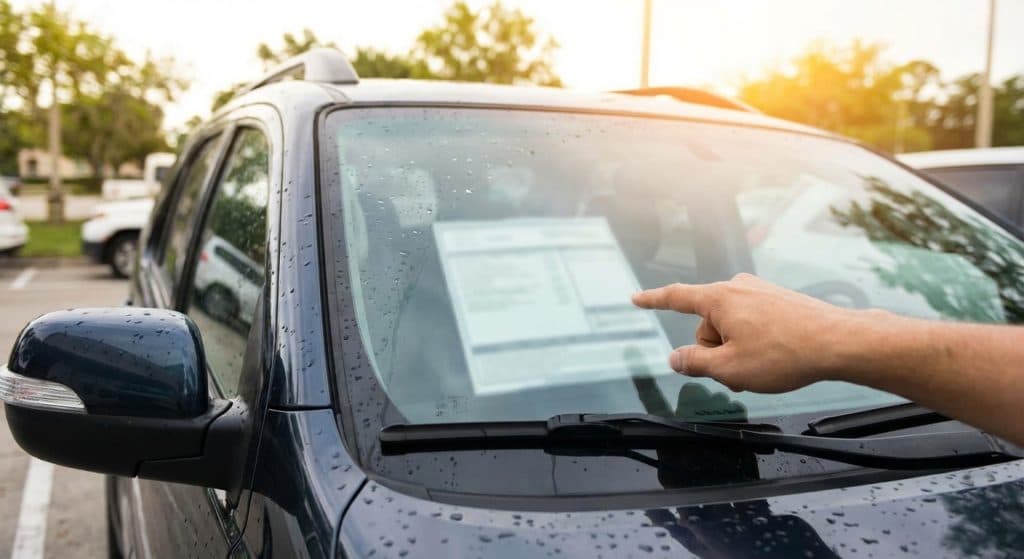
Most people glance at a window sticker, see a big number, and either feel relieved or walk away. But that sticker is packed with information that can save you hundreds, sometimes thousands, of dollars if you know how to read it properly.
Whether you’re buying new or trying to understand what a used car was originally worth, the window sticker tells the full story of what a vehicle came with, what it cost, and how it stacks up against similar cars. Here’s exactly how to read one from top to bottom.
What Is a Window Sticker, and Why Does It Matter?
The official name is a Monroney label, named after the U.S. senator who pushed for the legislation requiring it. Federal law mandates that every new car sold in the U.S. displays one. The dealer is legally required to keep it on the vehicle until the buyer removes it.
For used car buyers, the window sticker matters because it shows you what the car originally cost and what features it came with from the factory. That’s useful when you’re trying to figure out if the price someone’s asking is fair, or if a dealer is inflating the value of options the car doesn’t actually have.
You can often find a digital copy of the original window sticker by running the car’s VIN through a free VIN lookup tool. That gives you access to the original build data even if the paper sticker is long gone.
Model Information: The Starting Point
The top section of every window sticker covers the basics: make, model, model year, and trim level. This part sounds obvious, but it’s where a lot of buyers miss something important.
The trim level determines your base price and your base features. A Honda Accord EX and an Accord Sport aren’t the same car, even if they look identical from across a parking lot. The sticker spells out exactly which version you’re looking at, so you know what’s standard and what was added on.
The VIN also appears in this section. That 17-character number is your key to the vehicle’s history, recall status, and original configuration. Don’t skip it.
Standard and Optional Equipment: What the Car Actually Has
Below the model information, you’ll find two distinct sections: standard equipment and optional equipment. Standard equipment is everything that comes on every version of that trim, no matter what. Optional equipment is what this specific car has that others might not.
The optional equipment section is where things get interesting. Each option is listed with its own price. You might see things like a sunroof, premium audio, a towing package, or advanced driver assistance features. Every one of those has a dollar amount attached.
This matters because when you’re buying used, sellers and dealers often mention these options as justification for a higher price. Now you can verify exactly what was added and what it cost new. If someone tells you the car has a $3,000 tech package and the sticker shows it was $1,200, you’ve got leverage in that conversation.
Also pay attention to destination and delivery charges. These appear as a line item and reflect the cost to ship the vehicle from the factory to the dealership. They’re non-negotiable on new cars, but they’re part of the total number, so you should know what they are.
Pricing: Reading the MSRP the Right Way
The pricing section is what most people jump to first, and it’s the area that causes the most confusion. Here’s how it breaks down.
- Base MSRP: The manufacturer’s suggested retail price for the base version of that trim, before any options.
- Options total: The combined cost of every optional package or feature added to this specific vehicle.
- Destination charge: The fixed shipping cost from factory to dealer.
- Total MSRP: The sum of all three. This is the number at the bottom that people call “the sticker price.”
The word “suggested” in MSRP is doing a lot of work. The manufacturer suggests it, but the dealer can charge more or less. On popular models in low supply, dealers regularly mark prices up above MSRP. On slower-moving vehicles, they’ll often go below it.
Watch out for addendum stickers. These are secondary labels that some dealers attach right next to or on top of the official window sticker. They look similar to the real thing, but they cover dealer-added items like paint protection, nitrogen tire fills, or “market adjustment” fees. These are almost always negotiable or unnecessary. Don’t let them blend into the official price without scrutiny.
If you’re financing, use a car loan calculator to translate that total MSRP number into a monthly payment before you walk into the dealership. Knowing your numbers ahead of time changes the whole dynamic of the conversation.
Warranty Information: Know What’s Covered
Most window stickers include a brief warranty summary, often covering the basic limited warranty, powertrain coverage, and corrosion protection. The exact terms vary by manufacturer, but seeing these on the sticker helps you understand what transferable coverage might still apply if you’re buying a used version of the same model.
If you’re buying used, ask the dealer for the full warranty documentation separately. The sticker gives you the overview, but the fine print matters when something breaks.
Fuel Economy: The Numbers That Affect Your Budget Long-Term
The fuel economy section shows the EPA-estimated city and highway miles per gallon, plus a combined figure. The sticker also typically includes an estimate of annual fuel cost and a comparison showing how this vehicle ranks against similar cars.
These numbers come directly from EPA fuel economy data, and they’re tested under standardized conditions. Real-world mileage will vary depending on how you drive, the climate you live in, and how the vehicle has been maintained. Use the figures as a comparison tool, not a guarantee.
The fuel economy rating is especially useful when you’re comparing two similar vehicles. A difference of four or five miles per gallon adds up to real money over a few years of ownership, so don’t overlook this section when deciding between options.
Government Safety Ratings: Stars Tell a Story
One side of the window sticker is dedicated to government safety information. This includes crash test ratings from the NHTSA safety ratings program, which tests vehicles for frontal crash, side crash, and rollover resistance. Each category gets a star rating, with five being the best possible score.
If you see a sticker with no stars in a category, it doesn’t necessarily mean the vehicle failed. It may mean that particular model wasn’t tested in that category. Check the NHTSA database directly to get the full picture.
These ratings are especially worth reviewing if you’re buying for a family or plan to put high miles on the vehicle. Safety ratings don’t change with age, so a car that scored well originally still reflects that original engineering quality.
Parts Content: Where Was This Car Actually Built?
The parts content section shows the percentage of U.S. and Canadian parts used in the vehicle, and it identifies where the engine and transmission were manufactured. This section often gets skipped, but it’s become more relevant recently.
With tariffs affecting imported vehicle components, the parts origin information on a window sticker can have a real impact on pricing for new cars. For used buyers, it’s mostly informational, but it can help you understand the supply chain behind what you’re driving. A car assembled in the U.S. with a high percentage of domestic parts has a different cost profile than one heavily built overseas.
This is the section that surprises most people. A car wearing a well-known American brand name might show significant parts content from overseas, while a foreign nameplate might show a majority of U.S. content. The window sticker won’t lie to you about this.
Using the Window Sticker When Buying Used
If the car you’re looking at doesn’t have its original window sticker attached, that’s not a dealbreaker. Many manufacturers let you look up the original sticker online using the VIN. Browse used cars by make to find options and then track down the original build data once you’ve identified a vehicle you like.
Once you have the sticker, compare what was originally listed to what the seller is advertising. Options that appear on the sticker but aren’t mentioned in the listing are worth asking about. Features that a seller claims the car has but don’t appear on the sticker are worth verifying in person, before you hand over any money.
Always get an independent inspection before buying any used vehicle, regardless of what the sticker or the listing says. A pre-purchase inspection from a mechanic you trust is the best $100 to $150 you’ll spend in the entire process.
What About Window Stickers Outside the U.S.?
The Monroney label is a U.S. requirement. In the UK and Europe, vehicle pricing transparency works differently. UK buyers typically see an OTR (on-the-road) price that includes taxes and registration fees. European markets have their own pricing disclosure standards that vary by country. If you’re buying a vehicle originally sold outside the U.S., don’t expect a Monroney-style sticker. Research the pricing norms for that specific market before drawing comparisons to U.S. MSRP figures.
For vehicles sold in other countries like Ecuador, Chile, Vietnam, or Nicaragua, pricing structures and required disclosures are entirely different and often less standardized. The concept of a government-mandated window sticker with a full options breakdown is largely a North American idea. If you’re importing a vehicle or evaluating one with foreign market documentation, work with an import specialist who knows that country’s specific disclosure requirements.
Before You Sign Anything
Take a photo of the window sticker before you leave the lot. Once the deal starts moving, things can get confusing fast, and having that original document on your phone gives you a reference point for every number that shows up in the finance office.
Cross-check the MSRP you saw on the sticker against the purchase agreement. If numbers have changed or new fees have appeared, ask about each one specifically. A dealer who can’t explain a line item probably knows it shouldn’t be there.
The window sticker is one of the most honest documents in the car-buying process. Use it that way.
Was this helpful?
Put it to work. Research your next car or browse our top gear picks.