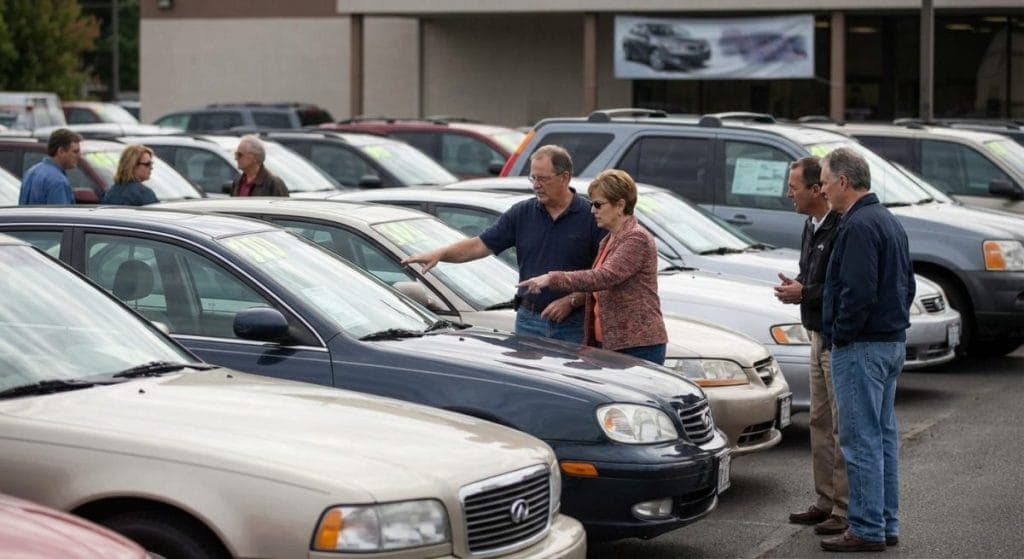
New car tariffs are reshaping the auto market in ways that every used car shopper needs to understand. When new car prices climb, buyers flood the used market, and that demand pushes used car prices up too. If you’re shopping for a used car right now, or thinking about selling, the tariff situation is directly affecting what you’ll pay or pocket.
Everything You Need to Know About Auto Tariffs
In 2025, the U.S. imposed a 25% tariff on imported vehicles and auto parts, hitting automakers with billions in added costs almost overnight. According to reporting from Car and Driver, General Motors, Ford, and Stellantis alone absorbed roughly $6.5 billion in tariff-related costs in 2025. That’s not a rounding error. That’s the kind of number that forces automakers to make hard choices about pricing, production, and where they build vehicles.
Automakers responded quickly. Some raised sticker prices. Others cut production or shifted manufacturing plans. Audi halted certain imports entirely and announced price increases on most 2026 models ranging from $800 to $4,100, according to TrueCar. Toyota and other global automakers signaled similar moves as 2026 model-year vehicles rolled out.
The tariff applies broadly across the auto industry, covering vehicles imported from most countries. The goal was to pressure automakers into building more vehicles on U.S. soil. The effect, at least in the short term, has been higher new car prices and a ripple that hit the used market fast.
UPDATE: The Supreme Court Has Struck Down Some Tariffs — But Not on New Cars
A federal court ruled the auto tariffs were illegal, calling into question the executive authority used to impose them. But the ruling was immediately put on hold pending appeal, so the tariffs remain in effect. The Supreme Court has struck down some tariffs in separate trade contexts, but the auto-specific tariffs on new cars are still standing as of mid-2026. Don’t expect relief at the dealership anytime soon based on court action alone.
U.S. Threatens to Return to 25% Tariff on South Korean Cars
Trade negotiations with South Korea have been rocky. The U.S. has threatened to reimpose a full 25% tariff on South Korean vehicles if a satisfactory deal isn’t reached. That would directly affect brands like Hyundai and Kia, which sell massive volumes in the U.S. market. Higher tariff costs on those models would push their new car prices up and, by extension, lift used values too.
Never Mind — There Is No EU Car Tariff Deal (Yet)
Talks with the European Union over auto tariffs have stalled. Despite optimistic headlines earlier in 2025, there’s still no formal agreement in place. European automakers selling in the U.S. are still operating under the existing tariff structure, which means brands like BMW, Mercedes-Benz, Volkswagen, and Audi are all factoring tariff costs into their pricing. Volkswagen has already raised prices on several models in response to the tariff environment.
Chinese Automaker May Enter U.S. by 2029
Chinese automakers face steep tariffs, well above 100% in some cases, which has effectively blocked their entry into the U.S. market so far. Some analysts believe a Chinese brand could find a workaround, possibly through manufacturing in a third country, and enter the U.S. market by 2029. That’s a few years out, but it’s worth watching if you care about long-term used car values in the affordable segment.
Can You Avoid a Car Tariff?
Not directly. If you’re buying a new car, the tariff is already baked into what the automaker charges the dealer, and the dealer passes that to you. Some vehicles built primarily with U.S. parts and assembled domestically are less affected, but very few new cars are fully insulated from tariff costs given how global auto supply chains are structured.
Buying used is one way to sidestep the direct tariff markup on new vehicle prices. But as more shoppers make that same calculation, used car prices rise in response. It’s not a clean escape, but a well-priced used vehicle can still represent real savings compared to a new car carrying a tariff-inflated sticker.
How Will Tariffs Affect Car Buying?
Cox Automotive has tracked the market closely through 2025 and into 2026. Their analysts point to affordability as the central problem. Higher new car prices push monthly payments up, and with interest rates still elevated, many car buyers simply can’t make the numbers work on a new vehicle. That redirects demand into the used market, which tightens supply and lifts prices there too.
For shoppers, this means less wiggle room on price than you’d expect. Dealers know used inventory is in demand. Cox Automotive analysts noted that used car values held stronger than typical seasonal patterns through late 2025 precisely because new vehicle prices kept buyers away from new car lots.
How Will Tariffs Impact the Value of Cars?
If you already own a car, the tariff environment is probably helping your resale value right now. Used vehicles are holding their value better than they would in a normal market because the alternative, buying new, has gotten more expensive. That’s good news if you’re selling. It’s frustrating if you’re buying.
The longer tariffs stay in place, the more the auto industry adjusts. Automakers may absorb more of the tariff costs over time to protect volume, or they may shift more production to the U.S. Either way, the current elevated used car prices are tied directly to the tariff situation, and a resolution would likely cool them off.
Which Cars Are Impacted the Most and Least?
Vehicles with heavy import dependence feel the tariff the hardest. European luxury brands, Japanese automakers like Toyota with significant import volume, and Korean brands are all in the crosshairs. Trucks and SUVs built in the U.S. with domestically sourced parts are somewhat more insulated, though no vehicle is fully immune given how interconnected auto parts supply chains are.
On the used side, the vehicles most affected by tariffs on new cars tend to see the biggest lift in used prices. If a new Toyota or Audi costs significantly more because of the tariff, the used equivalent becomes more attractive, and prices follow.
Will Tariffs Affect Insurance Rates and Replacement Car Parts?
Yes, and this one catches a lot of people off guard. The 25% tariff on auto parts affects replacement components, which means repair costs go up. When repairs cost more, insurance claims cost more. Insurers respond by raising premiums. This affects everyone with a car, not just people shopping for one. If you’re budgeting for car ownership in 2026, factor in the likelihood that your insurance and maintenance costs are trending higher.
When Will New Car Prices Drop?
That depends almost entirely on what happens with the tariffs. No credible analyst is predicting a significant drop in new vehicle prices while the current tariff structure stays in place. Cox Automotive and others have noted that automakers were already dealing with thin margins before the tariffs hit. They don’t have a lot of room to absorb costs and lower prices at the same time.
If a trade deal gets done with the EU or South Korea, or if court rulings eventually unwind some tariffs, you’d likely see some relief. But that’s speculative, and the timeline is uncertain.
Is Now the Time to Buy, Sell, or Trade In a Car?
If you’re selling or trading in, the current market favors you. Used values are elevated and demand is real. If you’re buying, you’re facing a tighter market than you would have two years ago. That said, deals still exist, especially on higher-mileage vehicles or less popular trims.
Before you buy anything, run a free VIN lookup to check the vehicle’s history, open recalls, and title status. A tariff-inflated market is exactly the kind of environment where sellers try to move problem vehicles faster. Know what you’re buying before you commit.
Also run your numbers through a car loan calculator before you walk into any dealership. Affordability is the core issue in this market, and knowing your actual monthly payment before you sit across from a finance manager puts you in a much stronger position. The tariff situation isn’t going to resolve itself this week. Make your decision based on the market as it actually is, not how you hope it might be soon.
Was this helpful?
Put it to work. Research your next car or browse our top gear picks.