Buying a used car without a proper look-over is one of the most expensive mistakes you can make. A few hours of careful inspection can save you thousands in repairs you never saw coming.
You don’t need to be a mechanic to spot most red flags. You just need to know where to look and what to take seriously. This guide walks you through the whole process, from kicking the tires to checking the paperwork, so you can buy a used car with confidence.
Start Before You Even See the Car
Before you schedule a visit, do your homework. Get the VIN from the seller and run it through a free VIN lookup tool. This tells you a lot about the car’s past, including reported accidents, title status, and odometer readings over time.
You should also pull a vehicle history report through a service like CARFAX. A CARFAX report can flag accident history, previous owners, service records, and whether the car was ever used as a rental or fleet vehicle. Don’t skip this step. A clean-looking used car can hide a messy history.
Check the NHTSA recalls database too. Enter the VIN and see if there are any open recalls that haven’t been fixed. This is especially important if you’re buying from a private seller, since dealerships are required to address open recalls on certified pre-owned vehicles.
Ask the Right Questions
Whether you’re dealing with a dealership or a private seller, ask direct questions before you ever show up. Why are they selling? How long have they owned it? Has it been in any accidents? Has it ever had major mechanical work done?
You’re not trying to catch them in a lie. You’re building a picture of the car’s life. A seller who gets defensive about basic questions is a red flag on its own. Someone who has nothing to hide will usually have answers ready.
Ask for all the maintenance records you can get. Oil changes, tire rotations, brake jobs, timing belt replacements. A used car with a solid paper trail is almost always a better buy than one with a mystery past.
Shopping for a Used Car? Do a Walkaround First
When you arrive, don’t jump straight into the engine bay. Start by standing back and looking at the whole car from a distance. Does it sit level? Are the panel gaps even all the way around? Uneven gaps between doors, the hood, or the trunk lid often point to prior collision repair.
Walk around the car slowly. Look down the sides from each corner. Ripples or waves in the body panels suggest filler or poor bodywork. Check the paint in direct sunlight if you can. Color mismatches between panels are a classic sign that a section was repainted after an accident.
Look underneath the car at every corner. Fresh undercoating applied in patches is sometimes used to hide rust or leak damage. A uniform coat is fine. Spotty coverage that looks recent is suspicious.
Inspect the Vehicle Carefully, Inside and Out
Open every door, including the trunk. Check the door jambs for paint overspray or signs of repainting. The inside of the jamb should match the body color exactly and have no rough edges or blending lines.
Inside the cabin, trust your nose first. A musty or mildew smell often means the car has had water intrusion. Check under the floor mats and in the trunk for any damp carpet, water stains, or rust. Flood-damaged cars can look perfectly fine on the surface but cause serious electrical problems down the road.
Test everything electrical. Windows, locks, mirrors, heated seats, infotainment screen, air conditioning, and every light switch you can find. Push every button. If something doesn’t work, get a repair estimate before you agree on a price.
Check the brake pedal while the car is sitting still. It should feel firm and stop partway down without sinking to the floor. A soft or spongy brake pedal can mean air in the lines or a failing master cylinder. That’s not a cheap fix.
Under the Hood
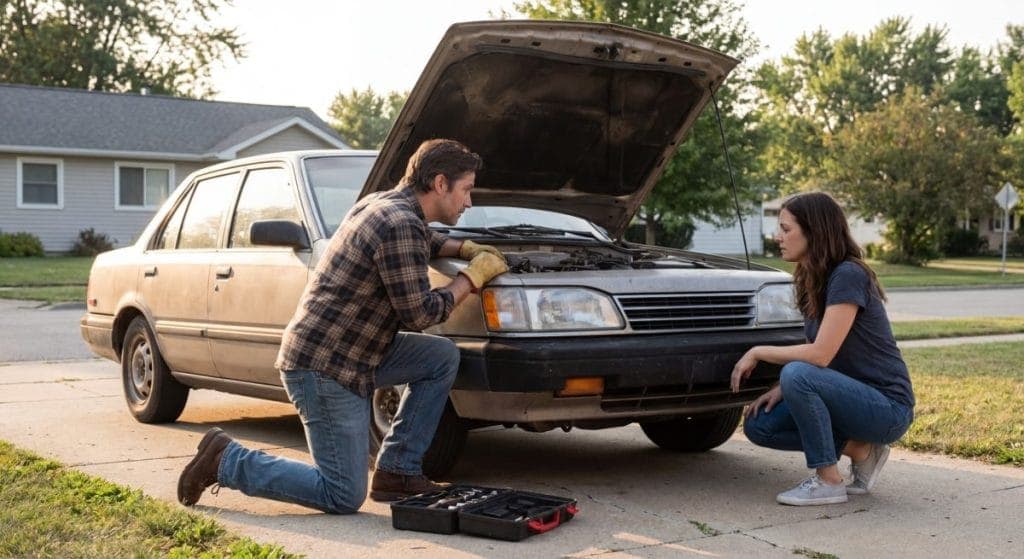
You don’t need mechanical training to do a useful engine inspection. Pop the hood and start by looking for anything obviously wrong.
Check the oil dipstick. The oil should be amber to brown and sit between the min and max marks. Black, gritty oil means it’s been a while since the last change. Milky or foamy oil is a serious warning sign, often pointing to a coolant leak mixing with the oil, which can mean a blown head gasket.
Speaking of coolant, check the reservoir. The level should be between the min and max lines. Look at the color too. Fresh coolant is usually bright green, orange, or pink depending on the type. Brown or rusty coolant suggests the cooling system hasn’t been maintained and could be harboring corrosion.
Look for any signs of a leak around the engine. Oil stains on the engine block, wet spots near hoses, or residue on the underside of the hood can all point to issues. A small seep might not be urgent, but a significant leak means repair costs are coming.
Check all the belts you can see. They should be firm and crack-free. Frayed or glazed belts are nearing the end of their life. Look at the hoses too. Squeeze them gently if you can reach them. They should feel firm but pliable, not rock-hard, cracked, or spongy.
Tires and Brakes
Crouch down at each wheel. Check the tire tread depth and look for uneven wear. Wear on one side of the tread often means an alignment issue or worn suspension components. Wear in the center of the tread can point to a history of overinflation.
Look through the spokes of the wheel at the brake rotor. It should be smooth. Heavy grooves or scoring mean the rotors are worn and need replacement. If you can see the brake pad, check how much material is left. Thin pads mean a brake job is coming up soon, and that’s a negotiating point at minimum.
Take It to Your Mechanic
Here’s the thing most buyers skip, and they regret it. A proper used car inspection from a trusted, independent mechanic is worth every penny. Budget around $100 to $150 for a pre-purchase inspection, and think of it as cheap insurance on a multi-thousand-dollar decision.
A mechanic can put the car on a lift and see things you simply can’t from ground level. Frame damage, rust on the undercarriage, leaking seals, worn bushings, and suspension problems are all things a mechanic catches in minutes that would take you far longer to find on your own.
Don’t use the mechanic at the selling dealership for your inspection. Find an independent shop. If a seller refuses to let you take the used car to a mechanic before you buy it, walk away. That refusal is a bigger red flag than almost anything a mechanic would find.
Once you have the mechanic’s report in hand, you can either negotiate repairs into the price, ask the seller to fix issues before the sale, or walk away knowing you made an informed call.
The Test Drive Tells You More Than You Think
Don’t rush the test drive. Take the used car on a variety of roads if you can. A highway on-ramp, a bumpy side street, and a parking lot are all useful. You want to stress the car in different ways.
On the highway, check that the car tracks straight without you fighting the wheel. Pulling to one side can mean alignment problems or uneven tire wear. At speed, listen for vibrations or shimmy through the steering wheel, which can point to wheel balance issues or worn front-end components.
On slower roads, brake firmly from about 30 mph to a stop. The car should slow in a straight line with no pulling, grinding, or pulsing through the pedal. A grinding noise when braking usually means metal-on-metal contact and immediate brake work needed.
Test the transmission through its full range. In an automatic, acceleration should be smooth with no slipping or hesitation between gear changes. A shudder or a sudden rev without a corresponding increase in speed is a transmission warning. In a manual, all gears should engage cleanly with no crunching.
Check the Window Sticker and Paperwork
At a dealership, the window sticker should list the car’s features and options. Cross-reference what’s listed against what’s actually in the car. Missing features that are listed on the sticker are worth questioning.
More importantly, verify the VIN on the sticker matches the VIN on the dashboard, the door jamb, and the title. A VIN mismatch anywhere is a serious red flag that can indicate the car was rebuilt from salvage, has a cloned identity, or has been stolen. Don’t brush this off.
Look at the title carefully. A clean title is what you want. A salvage, rebuilt, or flood title means the car was declared a total loss at some point. That’s not automatically a dealbreaker, but it should dramatically change what you’re willing to pay, and you need to know about it before you sign anything.
A second vehicle history report from a different provider can sometimes catch things that CARFAX misses. Running reports from two sources on a used car you’re serious about is a smart move, especially if you’re spending more than a few thousand dollars.
What Apps and Tools Can Help
A few tools make the DIY inspection easier. A simple OBD-II scanner (under $30 from most auto parts stores) plugs into a port usually found under the dash and reads any stored diagnostic codes. If the check engine light is off but there are stored fault codes, something is being hidden from you.
There are also apps that let you decode a VIN directly from your phone. They pull basic information from the NHTSA vPIC database, including the manufacturer, plant, and original equipment specs. It’s a quick way to confirm the car is actually what the seller claims it is.
A flashlight, a magnet (to check for body filler), and a tire tread depth gauge round out the toolkit. None of that costs much. All of it pays off.
Make a Smart Decision
You’ve done the walkaround, checked under the hood, taken the test drive, and had your mechanic look it over. Now it’s time to put a number on what you found. Use any issues as negotiating leverage, not just a reason to walk away. A used car with minor problems at the right price can still be a great buy.
If you’re working out financing, run the numbers through a car loan calculator before you agree to any payment terms. Know your monthly payment at different interest rates and loan lengths so you don’t get surprised at the table.
And if you’re still searching, you can browse used cars by make to compare your options before you commit to anything. The best time to keep your options open is before you’ve fallen in love with one particular car. Stay patient, stay thorough, and you’ll end up with a used car you’re actually glad you bought.
Was this helpful?
Put it to work. Research your next car or browse our top gear picks.