Low oil is one of the fastest ways to destroy a car engine, and most people never see it coming. If you’re buying a used car, or just trying to stay on top of basic maintenance, knowing how to check the oil level takes about two minutes and can save you thousands.
This guide walks you through every step, answers the most common questions, and helps you understand what you’re actually looking at when you pull that dipstick out.
Jump to:
- Step 1: Pre-Check Prep
- Step 2: Locate the Dipstick
- Step 3: Pull and Clean the Dipstick
- Step 4: Take a Reading
- Step 5: Wait and Re-Check
- How Often Should You Change Your Oil?
- How Much Is an Oil Change? And Other FAQs
- How Long Does an Oil Change Take?
Step 1: Pre-Check Prep
Before you do anything else, park on a level surface. If your car is sitting on a slope, the oil pools to one side and you’ll get a false reading. A flat driveway or parking lot is perfect.
Now, here’s a question a lot of people ask: can you check engine oil level cold, or does the car need to warm up first? The short answer is both can work, but there’s a right way to handle each situation.
If the car has been sitting overnight or for several hours, the oil has drained back down into the pan and you’ll get a pretty accurate reading cold. If you’ve just been driving, turn the engine off and wait at least five to ten minutes. That gives the oil time to drain back down from the upper parts of the motor and settle in the pan where the dipstick can actually reach it.
Can you check engine oil level when the car is on? No. Never check the oil with the engine running. Hot oil can splash and burn you, and you won’t get an accurate reading anyway. Always shut the engine off first.
Pop the hood and find the latch release, which is usually a lever under the dash on the driver’s side. Once you’ve pulled that, there’s a secondary latch at the front of the hood itself. Lift the hood and prop it open if your car doesn’t have an automatic stay rod.
Step 2: Locate the Dipstick
The dipstick is a long, thin metal rod that goes down into the engine’s oil pan. Most cars have a brightly colored handle, often yellow or orange, to make it easy to spot. Look for it near the front or side of the engine block.
If you can’t find it right away, check your owner’s manual. The manual will have an engine diagram that shows exactly where the dipstick sits. This is especially useful on newer vehicles where everything is tucked under plastic engine covers.
On some models, the dipstick sits close to the oil filler cap, which is the cap you’d remove to add oil. They’re different things, so make sure you’re grabbing the right one. The filler cap usually has an oil can symbol on it.
Model-specific tip: On bikes like the Hero Splendor, Honda Hunter 350, or a Honda Scooty, the dipstick is often attached to the oil filler cap itself on the side of the engine casing. You unscrew the cap and the dipstick comes with it. The same basic reading process applies, but you typically rest the cap on the threads without screwing it back in to get your reading. Check your bike’s manual for exact instructions since small displacement motors can vary.
Step 3: Pull and Clean the Dipstick
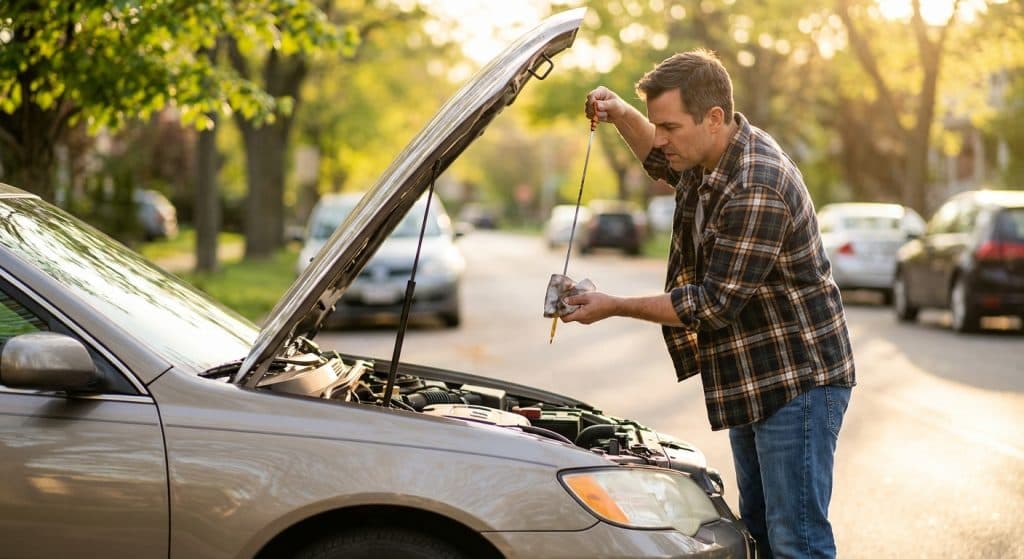
Grip the dipstick handle and pull the dipstick straight out. Don’t yank it at an angle, just pull it steadily upward. Once it’s out, grab a clean rag or paper towel and wipe the entire length of it clean.
This step matters more than people realize. When the engine runs, oil gets agitated and coats the dipstick tube. If you read it without wiping it first, you might see oil halfway up the stick that doesn’t actually reflect the true level. Always wipe before you read.
Look at the tip of the dipstick while you’re wiping it. The color and consistency of the oil tell you a lot. Healthy oil is amber to brown. If it looks black and gritty, an oil change is overdue. If you see a milky or frothy substance, that can signal coolant mixing with the oil, which is a serious engine problem you’ll want a mechanic to look at before buying any used vehicle.
Step 4: Take a Reading
Once the dipstick is clean, slide it all the way back into the tube. Make sure it’s fully seated, then pull it out again slowly. Hold it horizontally and look at where the oil film ends on the stick.
Every dipstick has two marks or a crosshatched zone near the tip. These indicate the minimum and maximum oil level. Your oil level should fall between those two marks. Right in the middle or closer to the top is ideal.
Here’s what the readings mean:
- Between the marks: You’re good. No action needed.
- At or below the minimum mark: You need to add oil soon. Don’t put off this one.
- No oil visible at all: Add a quart immediately, then recheck. If the level is still dangerously low after adding, don’t start the motor again until you’ve figured out where the oil is going.
- Above the maximum mark: Overfilling is also harmful. Too much oil creates excess pressure and can damage engine seals.
Also pay attention to whether you see a potential leak around the dipstick tube or near the oil pan. Oil spots on the engine or on your driveway are a warning sign worth investigating before buying any used car.
Step 5: Wait and Re-Check
If your oil level was low and you need to add oil, do it slowly. Remove the oil filler cap on top of the engine and use a clean funnel to avoid spills. According to Consumer Reports, you should start by adding about half a quart, then wait a minute and check the oil level again before adding more.
This matters because it’s easy to overshoot. Going from low to overfilled causes its own set of problems. Add a little, wait, check oil level, repeat. If you added a full quart and you’re still reading low, something more serious could be going on, like an oil leak or burning oil through the engine.
Once you’re in the safe zone on the dipstick, replace the filler cap firmly, put the dipstick back in, and close the hood. You’re done.
When to Check Oil Level: Making It a Habit
A lot of mechanics recommend you check your oil at every other fuel fill-up, or at least once a month. Older vehicles and high-mileage motors often burn or lose oil faster, so more frequent checks make sense. If you’ve just bought a used car, check the oil level every week for the first month to get a feel for how the engine behaves.
For motorcycle owners wondering when to check motorcycle engine oil level, the same cold-engine principle applies. Check it on a level surface, with the bike upright (not on its kickstand unless the manual says otherwise), after the engine has been off for a few minutes. Many bikes use a sight glass on the side of the engine instead of a traditional dipstick, so look for that window and confirm the oil level falls within the marked zone.
For Mercedes W211 owners asking about how to check engine oil level in the W211, that generation of Merc actually uses an electronic oil level sensor in addition to the traditional dipstick. You can read the oil level on the instrument cluster through the on-board computer menu, but it’s still worth doing a manual dipstick check periodically to verify the sensor is reading accurately.
How Often Should You Change Your Oil?
The old rule of thumb was every 3,000 miles, but that’s largely outdated for modern vehicles. Most newer cars with conventional oil can go 5,000 to 7,500 miles between oil changes, and vehicles running full synthetic can often go 10,000 miles or more. Your owner’s manual is the best source for your specific engine and driving conditions.
That said, if you’ve bought a used car and you don’t know the maintenance history, change the oil as soon as possible. You want fresh oil in the motor and a clean baseline to track from. An oil change on a used car you just bought is cheap insurance.
If you’re shopping for a used vehicle and want to see its service and recall history before committing, run the VIN through our free VIN lookup tool. It’s a fast way to check what you’re actually getting into.
How Much Is an Oil Change? And Other FAQs
A basic conventional oil change at a shop typically runs between $35 and $75. A full synthetic oil change, which most newer engines require, usually costs between $70 and $120 depending on the shop and your location. Doing it yourself can cut that cost significantly if you’re comfortable under the hood.
Can you check engine oil level when cold? Yes. Checking with a cold engine after the car has been sitting overnight is one of the most accurate ways to get a reading, since all the oil has settled back into the pan. Just make sure the car is on level ground.
What if there’s no dipstick? Some newer vehicles, including certain BMW and Mercedes models, don’t have a traditional dipstick. They rely on electronic sensors to report the oil level through the instrument cluster. Your owner’s manual will tell you how to access that reading. It’s less hands-on, but the same rules apply: check regularly, add carefully, and don’t ignore a warning light.
How much oil should I add if it’s low? Start with half a quart, wait, and check the oil level again. Most engines hold between four and six quarts total, so you don’t need to go wild. Overfilling by even a quart can cause pressure issues and damage seals in the motor.
How Long Does an Oil Change Take?
At a quick-lube shop, a standard oil change typically takes 20 to 45 minutes. A dealership service center can take longer, sometimes an hour or more, depending on how busy they are. Doing it yourself takes about 30 minutes once you’re comfortable with the process.
If you’re buying a used car and budgeting for early maintenance, use our car loan calculator to factor those first-year upkeep costs into your overall budget. It’s easier to plan ahead than to get surprised by a repair in month two.
Related Resources
Want to browse used cars by make and check reliability before you buy? Our vehicle database covers a wide range of makes and models so you can compare options before committing.
You should also check the NHTSA recalls database for any open recalls on a vehicle you’re considering. Unresolved recalls can affect engine performance, and they’re free to fix at a dealership once you own the car.
Checking the oil level is one of the simplest things you can do to protect any vehicle you own or plan to buy. Get in the habit of doing it regularly, and you’ll catch problems early before a small issue turns into a ruined engine. Next time you’re near a used car you’re thinking about buying, pop the hood and check oil level before anything else. What’s on that dipstick tells you a lot about how the previous owner treated the car.
Tags: auto maintenance, engine oil, oil level, dipstick, used car buying, car care tips, oil change, motor oil
Was this helpful?
Put it to work. Research your next car or browse our top gear picks.