Most people spend more time researching a new TV than they do vetting a used car. That’s a problem, because a bad used car purchase can cost you thousands in repairs you never saw coming.
Whether you’re buying from a private seller or a dealership, the process matters. This guide walks you through exactly what to check, what to ask, and what to walk away from when you’re ready to buy a used car.
How to Check a Vehicle’s History and Mileage
Before you even go look at a car in person, get its history. Every used car has a vehicle identification number, better known as a VIN. That number is a window into the car’s past, and you should always pull a report before you commit to anything.
Use our free VIN lookup tool to get started. A vehicle history report will show you previous owners, accident records, odometer readings, and whether the title is clean. If a seller won’t give you the VIN upfront, that’s a red flag worth paying attention to.
Mileage matters, but not in the way most people think. High mileage on a well-maintained car can be a better deal than low mileage on one that was neglected. Use the history reports to cross-reference mileage at different points in the car’s life. A big jump, or worse, a drop in recorded mileage, tells you someone may have tampered with the odometer.
History reports also flag things like flood damage and salvage titles. These aren’t always dealbreakers, but you need to know about them before you negotiate a price or consider a warranty.
Key Areas to Inspect Before Buying
Once you’ve done your homework on paper, it’s time to physically inspect the car. And we mean really inspect it, not just glance at it in a parking lot.
Rust
Get down low and look under the car. Rust on body panels is cosmetic and often manageable. Rust on the frame, subframe, or suspension components is a completely different story. Structural rust can make a car unsafe to drive and extremely expensive to fix.
Check the wheel wells, the underside of the doors, and the floor of the trunk. Surface rust on brake lines is also worth flagging. If you spot heavy rust anywhere structural, keep walking.
Body Panels and Paint
Step back and look at the car from a low angle in good lighting. Wavy panels, mismatched paint, or gaps that don’t line up evenly usually mean the car has been in an accident and repaired. That’s not always a dealbreaker, but it should show up in the vehicle history report. If it doesn’t, someone may be hiding something.
Brakes
Peek through the wheel spokes at the brake rotors. You’re looking for deep grooves, scoring, or a lip around the edge of the rotor. These signs mean the brakes are worn and need replacing soon. New brake pads and rotors on all four corners can easily run $400 to $800 or more depending on the vehicle.
Ask the seller when the brakes were last serviced. If they don’t know, that’s useful information too.
Tires
Uneven tire wear tells a story. Wear on the edges usually means the tires have been chronically underinflated. Wear down the center suggests overinflation. Wear on just one side points to alignment or suspension problems. Any of these mean you’ll need to spend money shortly after buying.
Fluids and Engine
Pop the hood and check the oil on the dipstick. Dark brown or black oil that smells burnt isn’t ideal, but it’s not always serious. Milky or foamy oil is more concerning because it can signal a blown head gasket. Check the coolant reservoir too. Low coolant with no obvious reason can point to a slow leak.
Look around the engine bay for fresh oil residue, which can indicate a leak someone tried to clean up before showing the car.
Take It to Your Mechanic
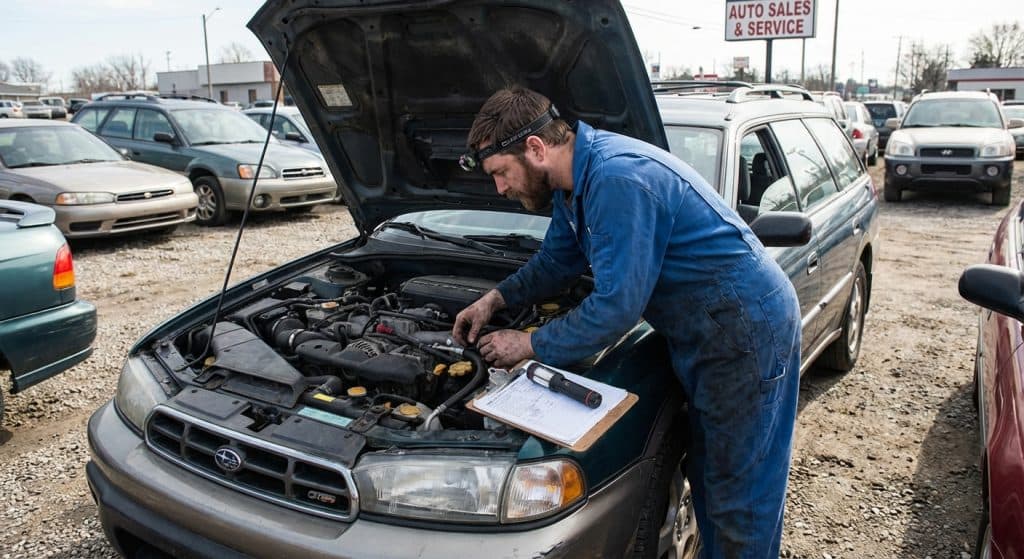
Here’s the step most buyers skip, and it’s the most important one. Before you hand over any money, have an independent mechanic inspect the car. Not the seller’s mechanic. Yours, or one you find yourself.
A pre-purchase inspection from a mechanic typically costs between $100 and $200. That sounds like money you don’t want to spend, but it can save you from buying a car with a cracked engine block or a transmission that’s on its way out. Those repairs can run into the thousands.
A good mechanic will put the car on a lift and inspect it properly. They’ll check for rust you might miss, test the brakes, look at the suspension, and scan for diagnostic trouble codes even if no warning lights are on. That last part is huge. Some sellers clear trouble codes right before a sale so the check engine light doesn’t show.
If a private seller won’t let you take the car to a mechanic, walk away. Legitimate sellers have nothing to hide. Dealerships are generally more accommodating here, but always confirm before you agree to anything.
Ask the Right Questions
The conversation with the seller tells you a lot, even beyond the answers themselves. Ask these questions and pay attention to how they respond.
- Why are you selling? There’s usually a reasonable answer, but hesitation or a story that keeps changing is worth noting.
- How long have you owned it? A seller who’s only had the car a few months may have discovered a problem after buying it.
- Has it ever been in an accident? Cross-check the answer against the vehicle history report.
- Is there any remaining warranty? Some manufacturer warranties are transferable. A valid warranty on a used car is a genuine bonus.
- Do you have maintenance records? A car with a paper trail is almost always better than one without.
Private sellers and dealerships will answer these questions differently. Dealerships usually have more documentation, but that doesn’t automatically make them more trustworthy. Ask the same questions regardless of who you’re buying from.
Read the Window Sticker
If you’re buying from a dealership, the window sticker on used cars tells you more than you might expect. It should list the asking price, any fees, and whether the car is sold as-is or comes with some kind of dealer warranty.
“As-is” means exactly what it sounds like. The dealership takes no responsibility for anything that goes wrong after you drive off the lot. That’s not always a bad deal if the price reflects the risk, but you need to know going in. Some dealerships offer a limited warranty even on standard used cars, so ask specifically what’s covered and for how long.
Don’t gloss over the fees section either. Dealer documentation fees, preparation fees, and other charges can add hundreds to the final price. Know what you’re agreeing to before you sit down at the finance desk.
Understanding Certified Pre-Owned vs. Standard Used Cars
Certified pre-owned (CPO) used cars go through a manufacturer-approved inspection process and come with an extended warranty backed by the automaker. That warranty is usually more solid than anything an independent dealer offers, and it can transfer to you as the new owner.
CPO used cars cost more than standard used cars from the same make and year. You’re paying for the warranty coverage and the peace of mind that comes with it. Whether that premium is worth it depends on the car, the warranty terms, and your tolerance for repair risk.
Standard used cars from dealerships may come with a short dealer warranty, often 30 to 90 days, or none at all. Used cars from private sellers almost never include a warranty. That’s why the pre-purchase mechanic inspection matters so much when you’re not getting warranty protection.
How to Find a Reliable Used Car from a Dealership
Not all dealerships are created equal. Some have strong reputations for honest dealing and well-inspected inventory. Others flip cars fast with minimal attention to what’s actually wrong with them.
Look up the dealership’s reviews on Google and the Better Business Bureau before you visit. Pay attention to patterns in the complaints. A few bad reviews are normal for any business. Repeated complaints about undisclosed mechanical issues or pressure tactics are worth taking seriously.
When you’re at the dealership, ask whether the used cars on the lot went through a multi-point inspection. Ask to see the inspection report. A reputable dealership will have one and won’t hesitate to show it. If they can’t produce it, that tells you something.
You can also browse used cars by make to get a sense of what’s available in your area and what fair pricing looks like before you step foot on a lot. Knowing the market price for a specific model gives you a real advantage when it’s time to negotiate.
What to Look for When Buying a Used Car: A Buyer’s Checklist
To pull it all together, here’s a quick reference of the main things to check before you buy a used car.
- Run the VIN through a history report and check for accidents, title issues, and odometer consistency
- Inspect for rust, especially underneath and in the wheel wells
- Check the brake rotors through the wheel spokes for wear
- Look at tire wear patterns for signs of alignment or suspension problems
- Check all fluid levels and look for leaks in the engine bay
- Ask about the warranty situation and get it in writing if one exists
- Take the car for a test drive that includes highway speeds and hard stops
- Have an independent mechanic inspect the car before finalizing anything
- Review all fees and paperwork carefully at the dealership
Shopping for a Used Car? Don’t Skip the Test Drive
A proper test drive is not a quick loop around the block. Take the car on the highway. Accelerate hard enough to feel how the engine responds. Brake firmly in a safe spot and notice whether the car pulls to one side. Listen for rattles, clunks, or any sound that doesn’t belong.
Test the air conditioning, the heat, every window, and every electronic feature. Used cars often have small issues with things like power windows or infotainment screens. These aren’t always expensive to fix, but they’re useful bargaining chips.
On your second test drive, take your mechanic along if possible. A second set of trained ears and eyes during the drive can catch things even a thorough inspection misses.
Final Thoughts: Make a Smart Used Car Purchase
Buying used cars the right way takes a bit of time, but it’s time well spent. The buyers who get burned are almost always the ones who skipped a step, rushed the process, or let excitement override common sense.
Pull the history report. Inspect it yourself. Have a mechanic look it over. Ask the hard questions. If the deal is real, it’ll still be there after you do your due diligence.
If you’re figuring out what you can actually afford to spend, run the numbers with our car loan calculator before you commit. Knowing your real budget before you fall in love with a car is the smartest move you can make.
Was this helpful?
Put it to work. Research your next car or browse our top gear picks.