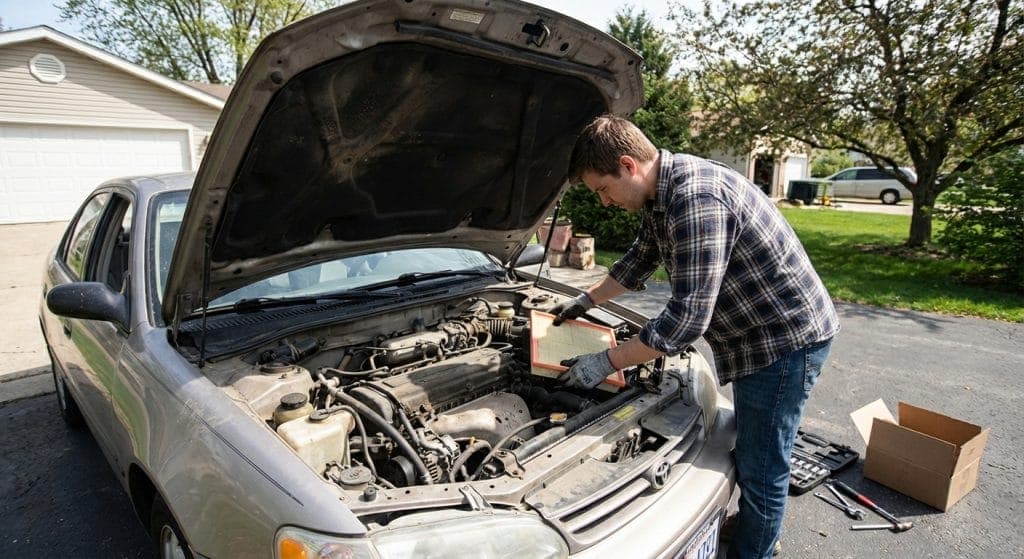
A dirty air filter is one of the cheapest problems to fix on any car, yet most people keep driving with a clogged one for months longer than they should. Swapping it out takes less time than a coffee run, costs about $15 to $30, and your engine will thank you for it.
If you’ve been paying a shop to do this for you, this guide is going to feel a little embarrassing. In the best way possible.
Why Replacing Your Air Filter Is Important
Your engine air filter has one job: keep dirt, dust, pollen, and debris out of the engine. Every time your engine runs, it pulls in massive amounts of air to mix with fuel. Without a clean filter sitting in the way, all that grit goes straight into the engine internals, and that’s where expensive damage starts.
A clogged air filter restricts airflow to the engine. When the engine can’t breathe properly, it works harder to compensate. You’ll often notice sluggish acceleration, a slight drop in fuel economy, or a rough idle. None of those are serious on their own, but they’re all signs your engine is running less efficiently than it should.
The fix is genuinely one of the simplest maintenance tasks on any vehicle. You don’t need a lift, you don’t need specialty tools, and you don’t need mechanical experience. If you can open the hood and locate a plastic box, you can do this.
How Often Do You Have to Change a Car Air Filter?
Most manufacturers recommend replacing the engine air filter every 15,000 to 30,000 miles, but that range is pretty wide for a reason. If you’re driving on dusty rural roads, your filter will clog faster than someone commuting on paved city highways. Check your owner’s manual for the specific interval your manufacturer recommends.
A good habit is to visually inspect the air filter every time you change your oil. A new filter looks white or light gray. A filter that needs replacing looks dark brown or black, and you might see visible debris packed into the folds. If it looks dirty, it probably is.
Threads on communities like Reddit suggest a lot of drivers go well past 30,000 miles without touching their air filter. That’s not a flex. That’s just deferred maintenance slowly grinding down engine efficiency.
Tools and Materials You’ll Need
Here’s the good news: you probably don’t need much. Most modern cars let you swap the air filter without any tools at all. Some older models use a few screws or clips that need a basic flathead or Phillips screwdriver.
- A replacement air filter that matches your vehicle’s year, make, and model
- A flathead or Phillips screwdriver (for some vehicles)
- A clean rag or paper towel (optional, for wiping out the housing)
To find the right air filter, just bring your vehicle info to any auto parts store. Places like AutoZone, O’Reilly, or even Walmart stock filters for most vehicles. You can also look up your car on the retailer’s website and search by year, make, and model. Brands like FRAM make filters for a wide range of vehicles and are widely available. If you want better filtration and plan to reuse the filter long-term, a washable high-performance air filter is an option worth considering.
On the question of whether Walmart changes car air filters, the short answer is no, not typically. Walmart’s Auto Care Centers focus on oil changes and tire services. Replacing an air filter is something they may do as an add-on during an oil change at select locations, but you’re better off just doing it yourself. It takes ten minutes and saves you a service fee.
How to Change Your Car’s Engine Air Filter: Step-by-Step
This process is consistent across most vehicles, though the exact layout varies. If you’re working on a specific model like a Honda Accord, the air filter housing is typically located near the front of the engine bay on the driver’s side. A quick YouTube search for your specific model will show you exactly where to look.
Step 1: Park, Turn Off the Engine, and Open the Hood
Make sure the engine is cool before you start. Pop the hood and secure it with the prop rod if your car doesn’t have a hydraulic hood. Take a moment to locate the air filter housing. It’s usually a black plastic box connected to a large air intake tube, sitting somewhere near the top of the engine.
Step 2: Open the Air Filter Housing
The housing is held shut with metal clips, screws, or wing nuts depending on your vehicle. Release all the clips or fasteners before trying to lift the lid. Automotive expert Charley Helvy, cited by wikiHow, specifically notes that releasing all the latches first helps the housing come apart smoothly without forcing anything. Don’t yank the lid off before everything is undone.
Step 3: Remove the Old Air Filter
Lift out the old air filter and take a good look at it. Hold it up to the light. If you can’t see light through the filter material, it’s done. You might also notice leaves, bugs, or packed dust in the folds, all signs the filter has been working hard and is past its useful life.
Step 4: Wipe Out the Housing
Before dropping in a new filter, give the inside of the housing a quick wipe. Loose debris sitting in the housing would just get pulled into the engine once you install a fresh air filter. A dry rag works fine here. Don’t use any liquids or sprays inside the housing.
Step 5: Install the New Air Filter
Drop the new air filter in, making sure it’s seated correctly. Most filters have a rubber gasket or lip around the edge that needs to sit flush against the housing. If it’s not seated right, unfiltered air can bypass the filter entirely, which defeats the entire purpose. Press it down gently and make sure it’s flat all the way around.
Step 6: Close and Secure the Housing
Put the lid back on and refasten all the clips, screws, or wing nuts. Give everything a gentle tug to confirm it’s secure. You’re done. The whole process for most vehicles takes between 10 and 15 minutes.
Common Mistakes to Avoid
The most common mistake is buying the wrong air filter. A filter that doesn’t fit correctly won’t seal properly, and a poor seal means dirty air reaches the engine. Always confirm the filter matches your exact vehicle before you buy.
A lot of people also try to clean a disposable paper filter instead of replacing it. Tapping it against a surface shakes out some loose dust, but it doesn’t restore the filter’s ability to trap particles. If the filter is visibly dark or it’s been more than 15,000 miles, just replace it. Filters are inexpensive. Engine repairs aren’t.
Finally, don’t forget to resecure every clip and fastener on the housing. A loose housing can cause a rattling noise and, more seriously, can let unfiltered air reach the engine. Take an extra thirty seconds to check everything is snug before you close the hood.
Is It Hard to Change a Car Air Filter?
Honestly, no. Changing an air filter is one of the most beginner-friendly maintenance tasks you can do on a car. There’s no draining fluids, no getting under the vehicle, and no torque specs to worry about. If you’ve never done any car maintenance yourself, this is the perfect place to start.
The process is hard to get wrong if you take your time, seat the filter properly, and make sure the housing is fully closed before driving. Most people who do this once never pay a shop to do it again.
Frequently Asked Questions
Is it necessary to change a car air filter?
Yes. A clean engine air filter protects your engine from debris that can cause long-term wear. Skipping this maintenance doesn’t save money in the long run because the eventual cost shows up in reduced engine performance, worse fuel economy, and potentially bigger repairs down the road.
Can you change a car air filter yourself?
Absolutely. Most people can do this with zero mechanical experience. Your owner’s manual will tell you where the air filter is located, and YouTube has model-specific videos if you want a visual walkthrough. Reddit’s r/LifeProTips community frequently highlights this as one of the easiest DIY car maintenance tasks to learn.
How do I know when to change my car air filter?
Visually inspect it. A clean air filter is white or light gray. A dirty one is brown or black. If you’re hitting the mileage interval in your owner’s manual (typically 15,000 to 30,000 miles), check it. If it looks dirty, replace it. If it looks clean, it can probably wait until next time.
How to change a car air filter on a Honda Accord?
The engine air filter on a Honda Accord sits in a rectangular housing on the driver’s side of the engine bay, connected to the intake tube. You typically release two or three clips to open the housing. No tools required. Pull the old filter, drop in the new one flush, close the housing, and you’re done. Check your specific model year’s manual or a YouTube video for the exact clip locations.
What happens if you never change your air filter?
Over time, a severely clogged air filter starves the engine of airflow. The engine compensates by pulling harder, which stresses components and burns more fuel. In extreme cases, a collapsed filter can allow debris to reach the engine directly. Regular replacement is cheap prevention against that scenario.
Make Sure Your Next Used Car Starts Clean
If you’re buying a used car, the condition of the engine air filter tells you a lot about how the previous owner maintained the vehicle. A completely black, clogged filter in a car with 25,000 miles is a red flag. It suggests other routine maintenance was probably skipped too.
Before you buy any used vehicle, run a free VIN lookup to check the vehicle history. And if you’re planning to finance, use our car loan calculator to see what the real monthly cost looks like before you sign anything. You can also browse used cars by make to compare your options before settling on one.
Always get an independent pre-purchase inspection from a trusted mechanic before buying any used car. A fresh air filter is a five-minute fix. Hidden engine damage is not.
Was this helpful?
Put it to work. Research your next car or browse our top gear picks.