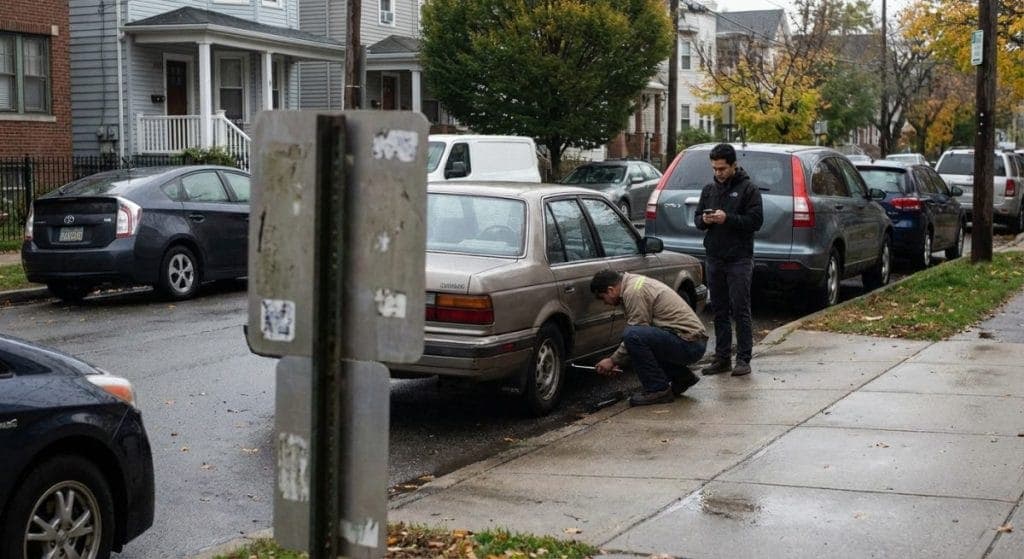
Catalytic converter theft is back on the rise, and if you’re shopping for a used car right now, this matters more than you might think. Thieves are getting faster, bolder, and more selective about which vehicles they target. Knowing which cars are in their crosshairs could save you thousands of dollars in repairs and headaches.
What’s Happening
After a brief dip following law enforcement crackdowns in 2022 and 2023, catalytic converter theft has rebounded sharply heading into 2026. The reason is straightforward: the precious metals inside catalytic converters, specifically platinum, palladium, and rhodium, have climbed in value again. Rhodium alone can be worth more per ounce than gold. That makes catalytic converters an easy payday for thieves who can remove one in under two minutes with a battery-powered saw.
According to data tracked by the National Insurance Crime Bureau and reported by The Hill, catalytic converter theft surged dramatically between 2019 and 2022, dipped in 2024 as some state laws took effect, and is now climbing again in 2025 and into 2026. California, Texas, and Washington have consistently ranked among the states with the highest theft volumes, largely due to population density and the concentration of targeted vehicles.
Some states have pushed back hard. California passed legislation requiring precious-metal buyers to be licensed and regulated. Several other states now require catalytic converters to be etched or marked so they can be traced. These laws are helping, but they haven’t stopped the problem. Thieves adapt. They move across state lines. The metal still sells.
What This Means for Used Car Buyers
Hybrids and Pickup Trucks Are Prime Targets
The Toyota Prius remains the most targeted vehicle for catalytic converter theft, and that’s unlikely to change in 2026. The Prius is a hybrid, which means its catalytic converters see less heat and wear than those in conventional gas vehicles. Less wear means more precious metal content, which means a bigger payday for thieves. A stolen catalytic converter from a Prius can fetch several hundred dollars at a scrap yard.
But the Toyota Prius isn’t the only vehicle you need to worry about. The Toyota Corolla has quietly become a growing target, especially in 2025 and 2026, as Prius owners have wised up and added protective equipment. Pickup trucks, particularly Ford F-Series and GM trucks, are also heavily targeted because of their high ground clearance, which gives thieves easy access underneath without a jack.
If you’re buying a used car and a Carfax report shows a prior theft claim or a catalytic converter replacement, take that seriously. A Carfax report can reveal repair history that a seller might not volunteer. Run your free VIN lookup before you hand over any money, and check for any prior insurance claims related to theft or underbody damage.
Easy Money for Thieves
The reason catalytic converter theft keeps coming back is simple: the risk is low and the reward is high. Thieves can strip a catalytic converter from a parked car in a shopping center lot in broad daylight. The precious metal inside gets sold to a scrap dealer, sometimes legally, sometimes not. Even with new state laws targeting the scrap trade, enforcement is inconsistent and the profit motive hasn’t gone away.
Replacement costs for catalytic converters typically run between $1,000 and $3,000 depending on the vehicle, and some hybrid models cost even more. That’s a repair bill that often exceeds a deductible and can make an older used car economically impractical to fix.
Vehicles Most Commonly Targeted in 2026
Based on patterns tracked through 2024 and into 2025, these are the vehicles that consistently show up at the top of theft reports:
- Toyota Prius (all generations, especially 2004–2009 and 2010–2015)
- Toyota Corolla (particularly 2005–2020 models)
- Ford F-150 and F-250 (high ground clearance makes access easy)
- Chevrolet Silverado and GMC Sierra
- Honda Accord and Honda CR-V
- Hyundai Elantra (also the most stolen car overall, according to NICB data)
If you’re buying any of these vehicles, inspect the underside carefully. Look for fresh saw marks, missing heat shields, or mismatched hardware around the exhaust system. A missing catalytic converter is obvious once you hear the car. Without one, it’ll sound like a race car with no muffler.
Why Laws Haven’t Solved the Problem
State-level reforms have made a dent, but thieves move fast. When one state tightens up scrap regulations, catalytic converters get transported to neighboring states with looser rules. The federal government has introduced legislation to create a national database for marking and tracking catalytic converters, but as of 2026, no comprehensive federal law is in place. That gap keeps the market alive for stolen catalytic converters.
What You Should Do
What Actually Helps
The most effective deterrents against catalytic converter theft are physical. A catalytic converter shield is a steel plate that bolts over your converter, making removal take significantly longer. Longer removal time means more risk for the thief, and most will move on to an easier target. These shields typically cost between $150 and $400 installed, which is a fraction of a replacement cost.
Getting your catalytic converter etched or painted with your VIN is also worth doing. Several states now have programs through local police departments that offer this for free. It doesn’t make your catalytic converter impossible to steal, but it makes it harder to sell and easier to trace.
What Doesn’t Work
Parking in a well-lit area helps slightly, but thieves hit well-lit parking lots constantly. Car alarms that don’t detect tilt or vibration won’t trigger during a catalytic converter theft because the car never moves. If your alarm doesn’t have a tilt sensor, it’s not going to help you here.
Before you buy any used vehicle on the targeted list above, run a free VIN lookup to check for prior theft claims or underbody repairs. Pull a Carfax report and look at the service history. A Carfax report won’t always capture every incident, but a pattern of claims or a recent exhaust repair on a high-theft vehicle should raise questions. Ask the seller directly. Their answer, or their hesitation, will tell you something too.
Catalytic converter theft isn’t going away in 2026. But buyers who do their homework before signing anything are in a much stronger position than those who find out about the problem after they’ve already driven home.
Was this helpful?
Put it to work. Research your next car or browse our top gear picks.