You’re about to hand over a significant chunk of money for a used car, and the wrong questions, or no questions at all, can cost you thousands in repairs down the road. Knowing exactly what to ask when buying a used car is the difference between a solid deal and a very expensive mistake.
What to Ask When Buying a Used Car: A Complete Checklist
Most people walk onto a lot or meet a private seller and let the conversation happen to them. Don’t do that. You want to be the one steering the conversation, getting real answers, and watching how the seller responds. The questions below are the ones that actually matter, organized so you can work through them in a logical order.
How Well Was It Maintained?
This is probably the single most important thing you can ask when buying a used car. High mileage on a well-maintained car is often a better bet than low mileage on one that’s been neglected. A car that’s had regular oil changes, fluid flushes, and scheduled service is going to last significantly longer than one that only saw a mechanic when something broke.
Ask for maintenance records. A responsible owner, whether it’s a dealership or a private seller, should be able to produce some kind of paper trail. Receipts from oil changes, records from a mechanic, or a service history printout from a franchise dealership all tell you the car was cared for. No records at all isn’t an automatic dealbreaker, but it should raise your guard.
Pay attention to the mileage relative to the car’s age. A general rule of thumb is around 12,000 to 15,000 miles per year. A five-year-old car with 30,000 miles sounds great, but it might mean the car sat unused for long stretches, which creates its own set of problems like dried seals and stale fluids.
What Services Did You Perform Before Putting It Up for Sale?
This question does two things. It tells you what’s been freshly addressed, and it tells you how upfront the seller is willing to be. A dealership that recently serviced the brakes and did a full inspection before listing is a better sign than one that just detailed it and called it ready. A private seller who says “I changed the oil and that’s it” is being honest, which is useful information.
When buying a used car from a private seller specifically, this question matters even more. Private sellers aren’t required to disclose much depending on your state, so you need to draw the information out yourself. Ask directly what service was done recently, and then ask if there’s anything they’ve been meaning to fix but haven’t gotten around to yet. That second question is where the real answers come out.
What Upcoming Service Requirements Does It Have?
Used cars always come with some maintenance around the corner. Timing belts, transmission fluid changes, brake pad replacements, tire rotations. These are normal costs of ownership, but you want to know about them before you buy so you can factor them into your offer or your budget.
Ask when the timing belt or timing chain was last replaced if the vehicle has one. A timing belt replacement on many cars can run $500 to $1,000 or more. If it’s overdue, that’s money you’re spending shortly after purchase. Knowing the service interval history helps you see what’s coming and gives you leverage if the price isn’t already accounting for it.
Which Features Don’t Work the Way They’re Supposed To?
Every used vehicle has something a little off. A sticky window switch, a Bluetooth connection that drops, a heated seat that only works on one setting. Some of it is minor annoyance. Some of it is a symptom of something bigger. Ask the seller directly what doesn’t work perfectly, and then test everything yourself during the test drive.
Roll every window up and down. Test every button on the infotainment screen. Check both heated and cooled seats if the car has them. Turn the AC to full cold and full hot. Flip the headlights, fog lights, and high beams on. Pop the trunk from both the interior button and the exterior handle. You’re looking for anything broken, and you’re also watching how the seller reacts when you find something they didn’t mention.
Are There Any Leaks?
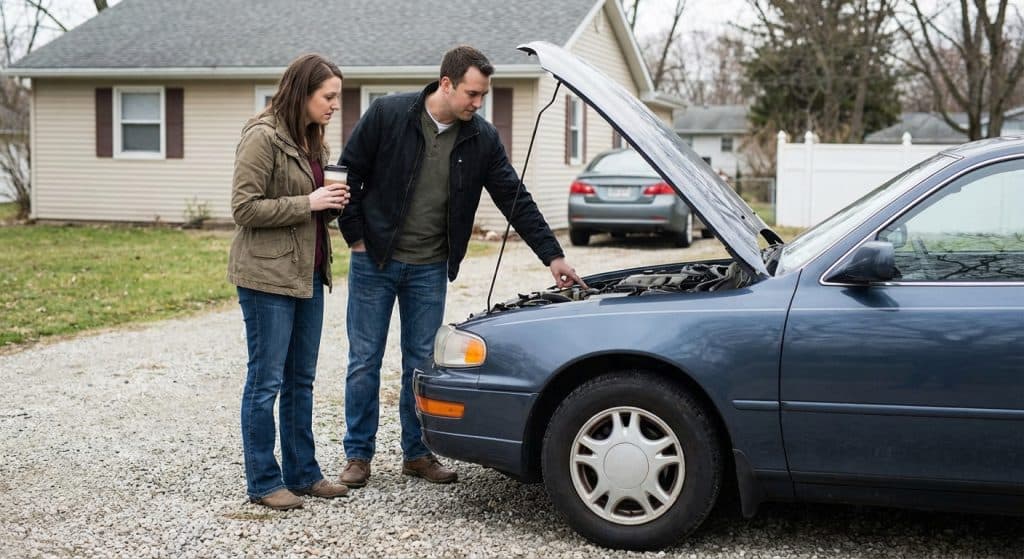
Oil leaks, coolant leaks, transmission fluid leaks. These can range from minor annoyances to signs of a very sick engine. Ask the seller straight up if the car leaks anything. Then go look for yourself. Check under the car for fresh spots on the ground where it was parked. Pop the hood and look at the engine bay for wet, oily residue around gaskets and hoses.
During your test drive, check the temperature gauge to make sure it stays in the normal range. Overheating is often a coolant or thermostat issue, and used cars with cooling system problems can turn into very expensive repair bills very quickly. Have a mechanic put the car on a lift to get a proper look underneath before you sign anything.
What to Check on the Car Yourself
The questions you ask verbally are only half the job. There’s a physical checklist you should run through on every used car you seriously consider buying.
- Body panels and paint: Look for mismatched paint, uneven panel gaps, or rippling in the body that suggests filler work. These are signs of a repaired collision that may not show up on a report.
- Tire condition: Check tread depth and look for uneven wear and tear. Uneven wear often means alignment or suspension problems.
- Under the hood: Look at fluid levels and colors. Dark, gritty oil or brown, murky coolant tells you more than any seller will.
- Inside the cabin: Look for water stains on headliners and carpets, which can indicate a flood-damaged vehicle.
Unusual wear and tear on the driver’s seat, steering wheel, and pedals relative to the stated mileage is another red flag. A car listed at 40,000 miles shouldn’t have a pedal rubber that’s worn through. These small details catch odometer fraud, which does happen with used cars.
Has the Car Ever Been in an Accident?
Ask this directly, and then verify it independently. Sellers sometimes don’t know about every incident in a car’s history, especially if they bought it used themselves. A vehicle history report through services like Carfax or AutoCheck will show reported accidents, odometer readings at registration, number of previous owners, and any branded title issues like salvage or flood damage.
Run the VIN through our free VIN lookup tool to get a head start on what the car’s history looks like before you even go to see it. A clean vehicle history report doesn’t guarantee a perfect car, since not every incident gets reported, but it gives you a solid baseline.
What’s the Title Situation?
A clean title means the car hasn’t been declared a total loss by an insurance company. A salvage title means it has. Rebuilt titles fall somewhere in between. Used cars with salvage or rebuilt titles sell for less, but they also carry more risk, reduced resale value, and sometimes trouble getting full insurance coverage.
When buying a used car from a private seller, confirm they have the title in hand and that their name matches the title. Buying from someone who doesn’t have the title yet, or whose name isn’t on it, is a situation you want to walk away from. At a dealership, title issues should be handled before you take delivery, so make sure to ask how that process works before you sign.
Is There Any Warranty Left?
This is one of the questions to ask when buying a used car that people often forget until after the sale. Used cars can still have remaining factory warranty coverage if they’re recent enough. Many manufacturers offer bumper-to-bumper warranty coverage for three years or 36,000 miles and powertrain warranty for five years or 60,000 miles. If the car is within those thresholds, that warranty may transfer to you.
Certified pre-owned vehicles are worth considering here. A certified pre-owned car has gone through a manufacturer inspection process and typically comes with extended warranty coverage beyond the original factory terms. You’ll pay a bit more than a standard used car, but the added warranty protection and inspection standards can make the premium worthwhile, especially on higher-mileage vehicles.
If you’re looking at a used vehicle with no remaining factory warranty, the dealership may offer an extended service contract. Read the terms carefully. These vary widely in what they cover, and some have significant exclusions. A warranty that doesn’t cover the parts most likely to fail on a higher-mileage car isn’t worth much.
What’s the Out-the-Door Price?
The sticker price on used cars is rarely the final number. Ask for the complete out-the-door price, including all taxes, registration fees, dealer fees, and any add-ons that have been bundled in. Some dealers add paint protection, tire and wheel coverage, or other products that inflate the final number. You can often decline these or negotiate them out.
Before you walk in, use our car loan calculator to get a clear picture of what monthly payments look like at different loan terms and interest rates. Knowing your numbers means you won’t get caught up in payment-focused negotiating that hides a bad overall deal.
The Questions to Ask When Buying a Used Car From Reddit and Real Buyers
If you spend any time on forums and communities discussing used car purchases, a few themes come up constantly. Real buyers want to know about hidden problems sellers didn’t disclose, surprise costs that hit right after purchase, and whether they overpaid. The questions that prevent all three are the ones in this article.
The most common piece of advice from experienced buyers is simple: get an independent inspection. Before finalizing any purchase, have a mechanic of your choosing, not one recommended by the seller, inspect the car. A pre-purchase inspection typically costs $100 to $150 and can save you from buying a used vehicle with thousands of dollars of hidden problems. It also gives you negotiating leverage if the inspector finds issues.
If you’re shopping for specific models, browse used cars by make to see what’s available and get a sense of realistic pricing before you walk into any negotiation.
Make the Most of Your Test Drive
A test drive is non-negotiable. Don’t let anyone talk you out of one, and don’t keep it short just to be polite. Drive the car at highway speeds. Brake hard in a safe spot. Make tight turns. Get on the highway and feel how it tracks. Listen for rattles, clunks, or vibrations that show up at specific speeds. These sounds are often the first signs of suspension or drivetrain wear that a visual inspection won’t catch.
If the seller is reluctant to let you drive it, or wants to ride with you on a short loop around the block, push back. A seller who won’t let you properly drive the car before buying has something to hide.
Go In Prepared
Buying a used car doesn’t have to be stressful if you go in with the right questions and a plan. Start with the free VIN lookup tool to check the history, know your financing numbers with the car loan calculator, and book a pre-purchase inspection before you hand over any money. The sellers who give you clear, honest answers to every question on this list are the ones worth doing business with.
Was this helpful?
Put it to work. Research your next car or browse our top gear picks.